Alright errbody, with the SAG Awards behind us and the Oscars looming, it's time for me to unveil my picks for the 10 best movies of 2011. They've changed a lot from the top 10 list I made a couple weeks ago, which can be attributed to the maelstrom of films I saw between then and now. God bless student discounts.
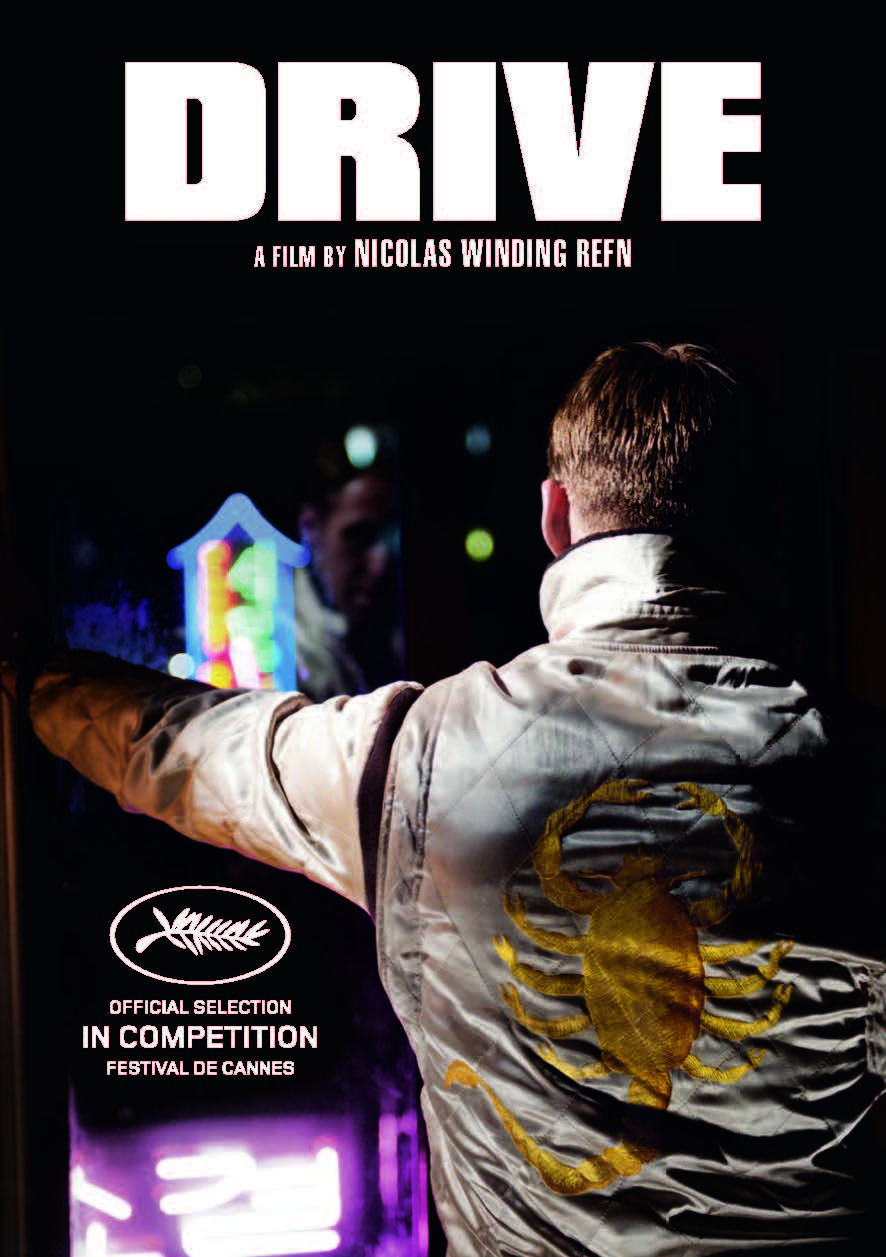
1. Drive
I don't want to fawn over Drive more than I already have - I practically wrote a goddamn research paper on it here last October - so I'll just say of course the Academy overlooked this film. It was far too innovative, too visionary, too ambitious and gory and polarizing and dynamic a movie for such a bureaucratic, squeamishly pandering organization to acknowledge. The Eberts and Travers' and yous and I's, of course, we know better. And if we're anything like the Driver, we should be content: simply knowing the truth and keeping on will be enough to cement Drive's standing among the greatest films.
...and a reeeaaaaaal heeero, reeeaaaaal huuuman being...
2. The Artist
What can I say about The Artist that hasn't been said - or seen - already? Every aspect of its production, from its direction to its cinematography to the impeccable acting of its players (even Uggie the dog!) fully utilizes and embraces the tenets of silent cinema, taking what could have been a flimsy gimmick and turning into something truly spellbinding. The heartwarming, inconspicuously profound wonder is a near perfect love letter to the black-and-white and silent films of yesteryear. Hell, it's a near perfect black-and-white and silent film. Double hell, it's a near perfect film, period. There's a reason it's widely predicted to sweep the Oscars. So what the triple hell are you waiting for, go see this movie now!
3. Take Shelter
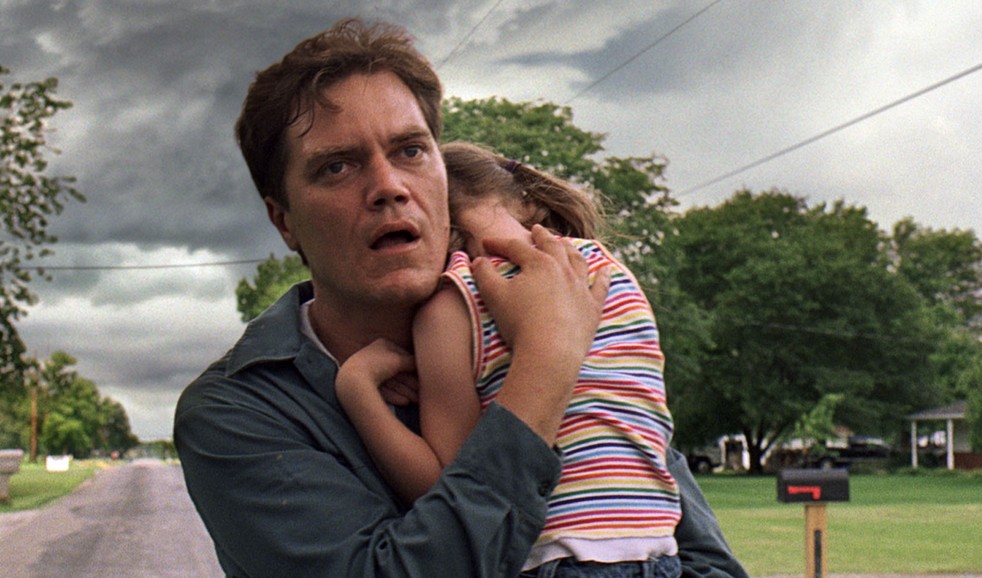
Perhaps the most upsetting thing about 2011's film season is that Take Shelter, the Critics' Week Grand Prix winner at Cannes last May, failed to get the attention it so deserved. Despite receiving near-universal - and enthusiastic! - critical acclaim, a limited release killed its chances of gaining wider recognition. It's a damn shame, too, because Take Shelter is a heart-wrenching triumph of cinematic suspense. Much of its success lies in the brilliant vision of writer-director Jeff Nichols, and the technical precision with which he realizes it. What really drives the film, however, are the two powerhouse performances from Jessica Chastain and especially Michael Shannon (more deserving of the Oscar than any of the nominees), who together create an unforgettable, utterly flooring drama.
4. Midnight in Paris
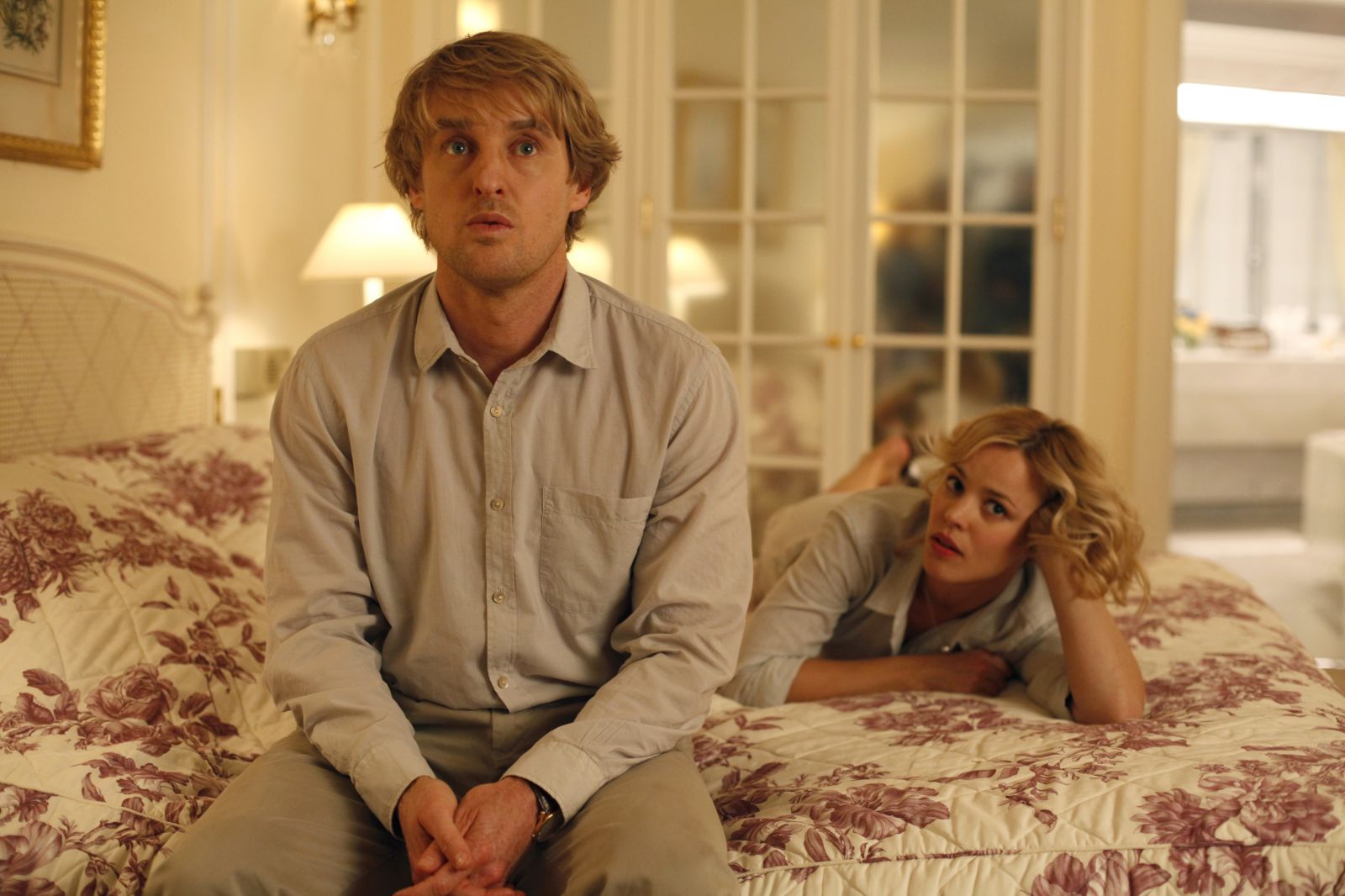
Would it be blasphemy to call Midnight in Paris the best Woody Allen film since Manhattan, or even Annie Hall? Wearing it's fantastical, unabashedly sentimental heart on its sleeve, the movie revels in an enthusiastic abundance of charm, sweetness, wit and intelligence. More than a wet dream for American lit majors, a romance with Francophilia or a love letter to the Roaring Twenties, Midnight in Paris is a thoroughly satisfying meditation on the nature of art itself. It's a manifesto for here, for in the moment, and it thinks forward with a genuine optimism refreshingly uncharacteristic of Allen's work. Owen Wilson channels the neurotic film legend perfectly as Gil Pender, and the rest of the cast - among them figures as diverse as Hemingway (an amazing Corey Stoll) and Dalí - never disappoint.
5. Hugo
I wonder what the executives at Paramount were thinking when Martin Scorsese pitched directing a 3D family film. Did they expect him to make as delightful and exotic - and meta, of all things - a movie as Hugo turned out to be? Like its chief rival at this year's Oscars, Hugo is at once an affecting, heartwarming story, a tribute to the silent era and a testament to the importance of cinema in general. Scorsese imbues his unique genius into both the form and content of the film, creating a self-aware viewing experience we rarely see at the movies; "magical" is the best way I've heard it described. Boasting a remarkable cast and featuring exceptional use of today's film technology (CGI and 3D that actually serve a purpose!), Hugo is a treat that merits multiple viewings.
6. Moneyball
Simply put, Moneyball is a masterful piece of film-making: well-written, made with superb technical craftsmanship, and loaded with heartfelt acting (perhaps Brad Pitt's greatest showing ever). It's a pretty uninspiring inspirational story in the grand scheme of things - the A's lose the first game of postseason and the Red Sox win it all two years later, even without our protagonist as their GM - but it's not a movie about the big picture. Quite the contrary, it's a film where two freethinking visionaries refuse to surrender to - and indeed, defeat - an archaic system, one dominated by outdated, all-or-nothing dogmas such as that of the "big picture." Moneyball is all about the small victories: how they're often the most important ones, how they're often the biggest game-changers of all.
7. Shame
Like the emotion itself, Shame is a melancholy, chilling, bleak, brutal - at times even unbearable - film, with an awe-inspiring Michael
Fassbender at its core. It is a truly beautiful movie about a world of unrelenting ugliness. Fassbender's performance is nothing short of brilliant: raw, riveting, wholly immersed. It's the most fully-realized character I've seen onscreen since that mad oilman declared he would drink our milkshakes back in '07. Fassbender's career has just started to rise (hurr durr), and for my money
he's the single most talented film actor to come along in years. And of course there's the phenomenal Carey Mulligan, herself a rising star, who's tragic, haunting rendition of New York, New York will send shivers down your spine. It - and the entire film - will affect you to your very marrow.
8. The Adventures of Tintin
What makes Tintin such a resounding success - even more so than how it faithfully captures the essence of Hergé's timeless, beloved comics series - is that in it, for the first time ever, we find Stephen Spielberg truly and completely unconfined by the restraints of reality. Putting on those 3-D glasses as the movie starts takes you down the rabbit hole in a way Avatar could only scratch the surface of. The Adventures of Tintin is a syringe filled with the pure, distilled imagination of the most creative minds in blockbuster film-making (Spielberg! Jackson! Moffat! Wright! Cornish!) and it's begging you to shoot up. Either you can resist it or dive in head first and enjoy one hell of a ride - one that would even make the Vulture relive his inner child.
Also Andy Serkis is Captain Haddock. So yeah.
9. Tinker Tailor Soldier Spy
Boasting easily the best ensemble cast of 2011 (The Help, eat your heart out), TTSS is an astounding adaptation of John le Carré's sweeping spy thriller. Each actor brings a powerhouse performance to his role; no one part overshadows the others. Oldman's subdued George Smiley is mesmerizing, conveying a world of thoughts, of plans and counter-plans and suspicions and suppressed emotions in the glint of a weary eye. It sets the tone for the muted world of Tinker Tailor: an engine of suspense ready to blow, a twisting spiral of paranoia that drives anything it can latch onto - audience included - into the abyss. Director Tomas Alfredson has stripped away all romanticism from the world of intrigue and espionage, leaving a bleak reality where the answers are hidden from us in plain sight.
10. The Tree of Life
Terrence Malick's experimental magnum opus should rightly be polarizing. To say The Tree of Life is difficult to grasp is like saying a 747 is fast. Perhaps it resorts to the occasional existential platitude or empty l'art pour l'art trapping. Perhaps it feels too damn long. But these faults are unavoidable in a film that addresses the puzzle of human nature head-on, that attempts to portray the entirety of all existence through the lens of a single family. This truly one-of-a-kind film never stops striving; the sheer ambition of Malick's creative vision, presented with the utmost technical and artistic mastery, secures The Tree of Life's place among cinema's finest. Even when this film fails, it succeeds. Like with 2001: A Space Odyssey, I think time will treat The Tree of Life favorably. Appropriate, isn't it?
Four outstanding films that made my first top 10 list sadly had to get the boot: Martha Marcy May Marlene, Melancholia, Super 8, and Rise of the Planet of the Apes. Other noteworthy movies from this year include 50/50, Attack the Block, Bridesmaids, Coriolanus, The Descendants (wildly overrated though it may be), Margin Call, Mission Impossible: Ghost Protocol, The Muppets, and Win Win.
In the last stand of sentient beings in the universe two young bloggers took up their last fortification in THE JUNCTION TO NOWHERE.
Showing posts with label At da moofies. Show all posts
Sunday, February 5, 2012
Sunday, January 8, 2012
THAT TIME OF THE YEAR! (part 1)
Just got back from The Artist with prooker; inevitably it got us thinking about our top 10 films of 2011. Before I dive in I should probably mention that I haven't seen most of the Oscar bait movies this season (yet), including Moneyball, War Horse, The Descendants, The Ides of March, Midnight in Paris, My Week with Marilyn, Shame, The Skin I Live In, Certified Copy, Beginners, A Separation, Margin Call, A Dangerous Method, Tinker Tailor Soldier Spy, or The Help. I'm working on the latter three - I'll probably see A Dangerous Method and TTSS with prooker, and even though I have no interest in seeing The Help whatsoever I got a free DVD of it.
Also I really wanna see Attack the Block. Just sayin...
And without further ado, here are my picks:
1. Drive
2. The Artist
3. Take Shelter
4. Hugo
5. The Adventures of Tintin
6. The Tree of Life
7. Martha Marcy May Marlene
8. Melancholia
9. Super 8
10. Rise of the Planet of the Apes
I bet this list will be very different once I've seen the films I mentioned in the beginning; at the very least I'm sure the bottom five will have changed significantly. Nothing's dethroning Drive, though. Nothing.
UPDATE 1/23: In the past two weeks I've seen The Help (dreadful), The Descendants (actually decent), Moneyball (great), Attack the Block (swag as hell) and Tinker Tailor Soldier Spy (spectacular). I'm seeing Shame this weekend and will likely get around to Midnight in Paris too via iTunes; after that I'm probably going to have to call it quits. I'll write up my completed top 10 list then, with brief explanations for each pick. Since I was underwhelmed by The Descendants, the likeliest best picture winner after The Artist and maybe Hugo - is it really Oscar-worthy or has this just been a mediocre year, a la 2008? - I'm assuming the less-favored of the big contenders (Ides, War Horse, Beginners et. al) will inspire the same reaction. Still upset that I didn't get around to Marilyn, The Skin I Live In and A Dangerous Method, though. :(
Also I really wanna see Attack the Block. Just sayin...
And without further ado, here are my picks:
1. Drive
2. The Artist
3. Take Shelter
4. Hugo
5. The Adventures of Tintin
6. The Tree of Life
7. Martha Marcy May Marlene
8. Melancholia
9. Super 8
10. Rise of the Planet of the Apes
I bet this list will be very different once I've seen the films I mentioned in the beginning; at the very least I'm sure the bottom five will have changed significantly. Nothing's dethroning Drive, though. Nothing.
UPDATE 1/23: In the past two weeks I've seen The Help (dreadful), The Descendants (actually decent), Moneyball (great), Attack the Block (swag as hell) and Tinker Tailor Soldier Spy (spectacular). I'm seeing Shame this weekend and will likely get around to Midnight in Paris too via iTunes; after that I'm probably going to have to call it quits. I'll write up my completed top 10 list then, with brief explanations for each pick. Since I was underwhelmed by The Descendants, the likeliest best picture winner after The Artist and maybe Hugo - is it really Oscar-worthy or has this just been a mediocre year, a la 2008? - I'm assuming the less-favored of the big contenders (Ides, War Horse, Beginners et. al) will inspire the same reaction. Still upset that I didn't get around to Marilyn, The Skin I Live In and A Dangerous Method, though. :(
Saturday, December 24, 2011
The Adventures of Tintin in One Sentence
Most fun I've had at the movies in a long, long time.
And only 107 minutes! All these trudging three hour epics in theaters these days could learn a thing or two from it...lookin' at you, Girl with the Dragon Tattoo.
Tuesday, October 18, 2011
King of Komics, Part I: First they came for the mutants...
First off guys - all what, one of you? - I'm sorry to say the Thor review I was talking about just ain't happening. My film major friend Dom, who was gonna guest-blog the review, is too busy with all his stuff to get it done (you can catch his most recent short film, The End, here) and since by now a review would be so far past the point of relevance anyway there's no reason to bother. I'll say it was definitely my favorite superhero movie of this past summer, and I loved how it didn't give two shits about its romance sub-plot, because who the fuck does in a superhero movie? The production design was spot-on, it totally captured the cosmic,
sci-fi tech aesthetic Jack Kirby endowed the original comics with. Seeing those fantasy realms so fully realized was refreshing change of pace, considering how disappointingly earthbound the genre usually is, and I was surprised by how well they meshed with the sequences on our humble planet. Some people thought all the bird's-eye shots were distracting, but it's a movie where Gods look down at earth and pay us a visit from their astral plane, so to me it was a clever cinematographic choice; Kenneth Branagh is the man when he's following an internal logic instead of randomly adapting As You Like It to 19th century Japan. Chris Hemsworth and Tom Hiddleston were outstanding as Thor and Loki, respectively, even when the writing occasionally failed them (particularly the latter, who would have been better off written in the vein of those great Shakespearean rat-bastards). All in all, Thor is a well put together, thoroughly satisfying superhero flick that pulled off an epic scope with just the right mix of humor, action and mythological gravitas. Also Anthony Hopkins was in it and he was wearing an eye-patch. And there was a black dude in a suit of shining gold armor. It was awesome.
Although it had a pretty positive consensus, a number of celebrated writers and critics had some big problems with Thor. I couldn't help but find most of these cases to be astonishingly petty and spiteful, as if they disliked it for no other reason than they had to dislike the summer's biggest blockbuster. It was interesting to see such respected figures react with such personal bile and glibness; I wonder what going on in their heads as they saw the movie belied such insecure, venomous lashings-out.
Did I mention it had Anthony Hopkins with an eye-patch and a black dude in gold armor? 'Cause
that happened. It was awesome.
And now onto what this post was supposed to be about: the King of Comics.
If you know anything about superhero comics than you're familiar with Jack Kirby. He is perhaps the single most acclaimed and influential figure in the medium (the only person I can imagine coming close is Will Eisner) - Grant Morrison has equated him to the William Blake of comics. There's a reason he's called the King. I'm not going to delineate his incredible accomplishments or how he formed, innovated, REVOLUTIONIZED!! everything about the industry; hundreds of others have done a more comprehensive job at that than I ever could. But I am going to touch on one thing that I feel most people have missed.
Jack Kirby defined the DC and Marvel Universes.
Okay, so that's a very flippant way of putting what I'm trying to say, let me explain. We all know that Kirby created or co-created most of the Marvel Universe, and we know that his groundbreaking Fourth World saga became a cornerstone of the DC Universe, but I'm talking about something bigger. When people debate why Marvel is better than DC or vice-versa, they're not really arguing whether or not the Hulk is cooler than Superman; both worlds themselves are utterly distinct on a foundational level, and have their own unique aesthetic properties. These two worlds appeal to people in very separate ways, and I'd argue that is what fanboys battle over in the greasy, pathetic cesspools below the Android's Dungeon.
So what makes Marvel and DC so fundamentally different, and how did the King shape those fundamental differences? It all comes down to the baddies. What makes villains so important in superhero comics (besides the whole causing the story's conflict thing) is that they illuminate some aspect of the hero that would otherwise be left obscured. They serve to contextualize the hero, providing added dimensions to the ideas they embody: all great supervillains riff off of and further explore an element of the superhero's thematic core, either as twisted parallels or antitheses. We learn more about what Batman represents by juxtaposing him with the Joker or Two-Face; pitting Spidey against the Vulture and Doc Ock helps shed light on what our hero's all about. Kirby was the first to advance the conceit that superheroes and villains - like the figures of classical mythology - are heightened, abstract personifications of universal ideas, their battlegrounds the stages where they play out grand debates...WITH PROTON BLASTS!
It's Spring, 1966 and the Marvel Universe is still getting bigger and bigger, ever-expanding after the Big Bang that was Fantastic Four #1 five years ago. Stan Lee is content with things the way they are, with simply continuing to add new faces and circumstances to Marvel's ever-increasing batch of (lucrative!) icons. The rest of the bullpen, however, feels confined under Lee and have trouble reconciling their current situation with their loftier artistic/philosophical ambitions. Steve Ditko's starting to devote himself to Objectivism in all its forms; he'll leave Amazing Spider-Man in August. Kirby's work now can barely contain his cosmic imagination, which pushes the medium past what it was capable of at the time to craft a Space Age mythology. He wants to give a greater meaning to this universe he has created, and he thinks to himself, "if I can use a supervillain to contextualize a superhero, I can create a supervillain big enough to go up against all the heroes and contextualize their entire world!"
AND LO, MORTAL, SO DAWNS THE COMING OF GALACTUS...!
In Fantastic Four #48, Kirby introduced Galactus, the Big Bad of the Marvel Universe. He ain't the final boss of MvC3 for nuthin'. The fabulous image above is from Lee/Kirby's Thor #169 (Oct. 1969), and it pretty much lays out Galactus' shtick. He's the Devourer of Worlds, a tremendous Godlike being above myth, a legendary force of nature beyond reproach or opinion, beyond our mortal conceptions of good and evil. He survives by eating planets, so he comes back again and again to menace the heroes of Earth when it comes time to feed. What's important is that he's not doing it out of malicious intentions - he's not some diabolical monster like Loki or the Red Skull - it's just that a guy's gotta eat, right? You can't fault him for being self-interested and not wanting to starve to death, can you? Lee puts it really well in this splash page: "The puny survivors flee! I shall make no move to stop them! For I am indifferent to their fate!"
There it is, Galactus as the embodiment of indifference, of our natural inclination toward selfish inaction and apathy. That's the archenemy of the Marvel Universe. The MU isn't really concerned with the dichotomy of good vs. evil (which is why Mephisto feels so out-of-place in it), nor is it particularly conscious of it's own myth-making or iconography. Marvel was always considered the more naturalistic and grounded of the Big Two - that's what differentiated it from boring old DC Comics in the 60s, the flawed characters and real-world problems and all that revolutionary jazz - so it's appropriate that the MU is framed around a social reality affecting our society. The Marvel heroes stem from a tradition of social activism; at their very essences, all of them are taking a big stand against indifference.
Let's start with Spider-Man, since he's both the most obvious example and the most enduringly popular Marvel character. After he gets his powers, Peter Parker uses them to rake in cash as an entertainer. Selfish, perhaps, but...well yeah it's a pretty damn selfish way to use superpowers. Then he witnesses a robbery and, thinking there's no reason to get involved, does nothing to stop the burglar as he runs by Peter. This is something the movie screwed up big time: it gave Peter a reason to let the burglar get away. In the comics, he is simply predisposed to inaction, and that was the entire point. He pays for it when that same burglar ends up murdering dear old Uncle Ben that very night. "With great power there must also come -- great responsibility!" From that point on, Peter abandons his selfishness, vowing to never make the same mistake again - as Spider-Man he now fights against the pervasive apathy that led his uncle's death.
Next we have...how about Captain America? He was the first Marvel superhero after all, barring Namor and the original Human Torch. Cap punched Hitler in the jaw a full nine months before the US entered World War II, at a time when public sentiment was entrenched in isolationism. While the rest of America sat idly by, choosing not to intervene in the systematic execution of millions, scrawny Steve Rogers enlisted in the Army and volunteered for an incredibly dangerous super-soldier experiment. He refused to be crippled by the same inaction that plagued his beloved country, and inspired others to do the same (both in the comics and out of them). The Cap movie messed this up, too, but that movie messed a whole lotta things up. He and Bucky thwarted Nazi saboteurs and spy rings long before Pearl Harbor allowed them to thwart actual Nazis on the front lines.
We find a similar thread in the Fantastic Four's origin story. In the original tale, we're at the beginning of the Space Race. Those damn dirty Soviets got the heads-up on us and we've got a lot of catching up to do. In the Marvel Universe, America just can't get its act together, we're all too listlessly complacent to get anything done while those zany communists are up there making a space cannon or something. It's up to Reed Richards to build his own private rocket and put our flag on the moon before the cosmonauts get there. The story's been updated again and again, but every time the principle is still the same. Now it's Reed discovering an anomaly in space heading towards earth and saying, "hey these cosmic rays I'm seeing could be pretty dangerous, we should probably take a closer look at this or something," to which his colleagues, the government and the general public respond with a resounding "meh." As we know, Reed and his true believers get the last laugh when those cosmic rays give them all cool powers.
It's interesting to note that, at the climax of Galactus' first appearance, the Four scare him away with the threat of mutually assured destructing, bringing the greatest social concern of the Cold War to the attention of cosmic beings. Just sayin'.
The Hulk came next in Marvel's publication history; he, too, fits the mold. We're introduced to Bruce Banner as the head physicist for a modern-day Manhattan Project -- think of him as Oppenheimer without the humanity. He's aloof, reserved, emotionally withdrawn; about as indifferent as a person can get. He's also the man behind the gamma bomb, a WMD that makes Fat Man look like a spitball. And. He. Doesn't. Give. A. Fuck. So it's poetic justice that, after he's suddenly struck with conscience, Banner gets blasted with his own doomsday device and transforms into a furious, angst-ridden monster, a giant green cautionary tale on indifference toward human suffering. The same idea applies to Tony Stark, who didn't care that his career amounted to providing the world with tools for death and destruction...until it got him kidnapped and stuck with a battery for a heart. So to save the world from his own disinterest he becomes Iron Man! As Stark put it in the movie, which this time got it completely right, "I saw young Americans killed by the very weapons I created to defend them and protect them. And I saw that I had become part of a system that is comfortable with zero-accountability...I came to realize that I had more to offer this world than just making things that blow up."
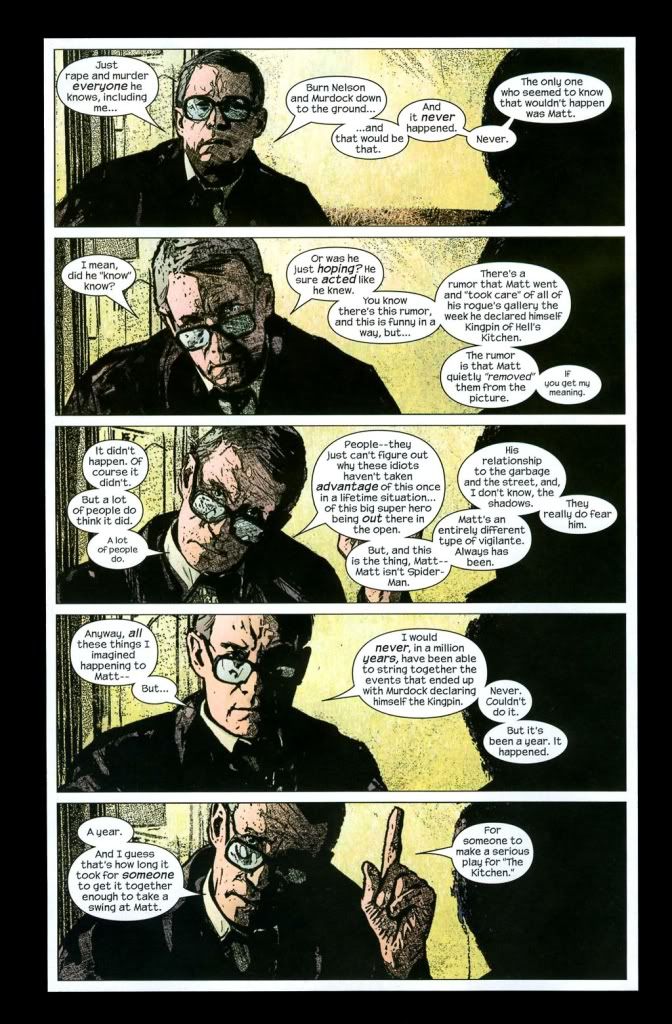
Alright, who's left? Thor? Yeah, he definitely needed a lesson in humility, but the real reason daddy banished him was because he was set against the status quo (great link, btw): a non-aggression pact with the fucking Frost Giants, fer Chrissake! When Thor comes back he's no longer arrogant, but set against the complacent order of things more than ever. Doctor Strange? Same deal as Tony Stark, but with medical billing instead of weapons manufacturing and magic instead of a robot suit. The X-Men? For all the people who sling hate-filled "muties!", there must be many more who simply aren't invested in the issue enough to bother with mutant equality; it's a lot like the big problem facing gay marriage legislation outside of the South, I imagine. Daredevil? Indifference enshrouds his world like a fog. The Kingpin became as powerful as he is simply because no one bothered to try and stop him, and now his omnipresent influence can only be casually accepted as The Way Things Are. No one really cares about anything Daredevil does because they know he can't be anything more than a nuisance to the Kingpin's untouchable crime empire. Yet in spite of it all he continues to fight the good fight...and if anyone arsed themselves to look, including ol' Mr. Fisk, they'd discover what a difference he's actually making. It's all spelled out pretty explicitly in Born Again.
Have I covered all the bases yet?
As you can see, this theme always lurked just underneath the surface of Marvel's foundations. But that's all it was, a recurring idea buried deep within each individual mythos, only loosely connected to a greater whole. Kirby was perceptive enough to recognize this thread and, with the introduction of Galactus, brought it to light. Solidified it. Through Galactus, this cosmic God of Indifference constantly in the back of every other character's mind, Kirby was able to thematically unite the shared universe in a way never before seen; solely by the virtue of the character's existence he formally cemented the struggle against inaction as the core, fundamental tenet of the Marvel Comics world.
Tune in next time for Part II, when I do the exact same thing with DC. Fun stuff, I know!
Although it had a pretty positive consensus, a number of celebrated writers and critics had some big problems with Thor. I couldn't help but find most of these cases to be astonishingly petty and spiteful, as if they disliked it for no other reason than they had to dislike the summer's biggest blockbuster. It was interesting to see such respected figures react with such personal bile and glibness; I wonder what going on in their heads as they saw the movie belied such insecure, venomous lashings-out.
Did I mention it had Anthony Hopkins with an eye-patch and a black dude in gold armor? 'Cause
that happened. It was awesome.
And now onto what this post was supposed to be about: the King of Comics.
If you know anything about superhero comics than you're familiar with Jack Kirby. He is perhaps the single most acclaimed and influential figure in the medium (the only person I can imagine coming close is Will Eisner) - Grant Morrison has equated him to the William Blake of comics. There's a reason he's called the King. I'm not going to delineate his incredible accomplishments or how he formed, innovated, REVOLUTIONIZED!! everything about the industry; hundreds of others have done a more comprehensive job at that than I ever could. But I am going to touch on one thing that I feel most people have missed.
Jack Kirby defined the DC and Marvel Universes.
Okay, so that's a very flippant way of putting what I'm trying to say, let me explain. We all know that Kirby created or co-created most of the Marvel Universe, and we know that his groundbreaking Fourth World saga became a cornerstone of the DC Universe, but I'm talking about something bigger. When people debate why Marvel is better than DC or vice-versa, they're not really arguing whether or not the Hulk is cooler than Superman; both worlds themselves are utterly distinct on a foundational level, and have their own unique aesthetic properties. These two worlds appeal to people in very separate ways, and I'd argue that is what fanboys battle over in the greasy, pathetic cesspools below the Android's Dungeon.
So what makes Marvel and DC so fundamentally different, and how did the King shape those fundamental differences? It all comes down to the baddies. What makes villains so important in superhero comics (besides the whole causing the story's conflict thing) is that they illuminate some aspect of the hero that would otherwise be left obscured. They serve to contextualize the hero, providing added dimensions to the ideas they embody: all great supervillains riff off of and further explore an element of the superhero's thematic core, either as twisted parallels or antitheses. We learn more about what Batman represents by juxtaposing him with the Joker or Two-Face; pitting Spidey against the Vulture and Doc Ock helps shed light on what our hero's all about. Kirby was the first to advance the conceit that superheroes and villains - like the figures of classical mythology - are heightened, abstract personifications of universal ideas, their battlegrounds the stages where they play out grand debates...WITH PROTON BLASTS!
It's Spring, 1966 and the Marvel Universe is still getting bigger and bigger, ever-expanding after the Big Bang that was Fantastic Four #1 five years ago. Stan Lee is content with things the way they are, with simply continuing to add new faces and circumstances to Marvel's ever-increasing batch of (lucrative!) icons. The rest of the bullpen, however, feels confined under Lee and have trouble reconciling their current situation with their loftier artistic/philosophical ambitions. Steve Ditko's starting to devote himself to Objectivism in all its forms; he'll leave Amazing Spider-Man in August. Kirby's work now can barely contain his cosmic imagination, which pushes the medium past what it was capable of at the time to craft a Space Age mythology. He wants to give a greater meaning to this universe he has created, and he thinks to himself, "if I can use a supervillain to contextualize a superhero, I can create a supervillain big enough to go up against all the heroes and contextualize their entire world!"
AND LO, MORTAL, SO DAWNS THE COMING OF GALACTUS...!
In Fantastic Four #48, Kirby introduced Galactus, the Big Bad of the Marvel Universe. He ain't the final boss of MvC3 for nuthin'. The fabulous image above is from Lee/Kirby's Thor #169 (Oct. 1969), and it pretty much lays out Galactus' shtick. He's the Devourer of Worlds, a tremendous Godlike being above myth, a legendary force of nature beyond reproach or opinion, beyond our mortal conceptions of good and evil. He survives by eating planets, so he comes back again and again to menace the heroes of Earth when it comes time to feed. What's important is that he's not doing it out of malicious intentions - he's not some diabolical monster like Loki or the Red Skull - it's just that a guy's gotta eat, right? You can't fault him for being self-interested and not wanting to starve to death, can you? Lee puts it really well in this splash page: "The puny survivors flee! I shall make no move to stop them! For I am indifferent to their fate!"
There it is, Galactus as the embodiment of indifference, of our natural inclination toward selfish inaction and apathy. That's the archenemy of the Marvel Universe. The MU isn't really concerned with the dichotomy of good vs. evil (which is why Mephisto feels so out-of-place in it), nor is it particularly conscious of it's own myth-making or iconography. Marvel was always considered the more naturalistic and grounded of the Big Two - that's what differentiated it from boring old DC Comics in the 60s, the flawed characters and real-world problems and all that revolutionary jazz - so it's appropriate that the MU is framed around a social reality affecting our society. The Marvel heroes stem from a tradition of social activism; at their very essences, all of them are taking a big stand against indifference.
Let's start with Spider-Man, since he's both the most obvious example and the most enduringly popular Marvel character. After he gets his powers, Peter Parker uses them to rake in cash as an entertainer. Selfish, perhaps, but...well yeah it's a pretty damn selfish way to use superpowers. Then he witnesses a robbery and, thinking there's no reason to get involved, does nothing to stop the burglar as he runs by Peter. This is something the movie screwed up big time: it gave Peter a reason to let the burglar get away. In the comics, he is simply predisposed to inaction, and that was the entire point. He pays for it when that same burglar ends up murdering dear old Uncle Ben that very night. "With great power there must also come -- great responsibility!" From that point on, Peter abandons his selfishness, vowing to never make the same mistake again - as Spider-Man he now fights against the pervasive apathy that led his uncle's death.
Next we have...how about Captain America? He was the first Marvel superhero after all, barring Namor and the original Human Torch. Cap punched Hitler in the jaw a full nine months before the US entered World War II, at a time when public sentiment was entrenched in isolationism. While the rest of America sat idly by, choosing not to intervene in the systematic execution of millions, scrawny Steve Rogers enlisted in the Army and volunteered for an incredibly dangerous super-soldier experiment. He refused to be crippled by the same inaction that plagued his beloved country, and inspired others to do the same (both in the comics and out of them). The Cap movie messed this up, too, but that movie messed a whole lotta things up. He and Bucky thwarted Nazi saboteurs and spy rings long before Pearl Harbor allowed them to thwart actual Nazis on the front lines.
We find a similar thread in the Fantastic Four's origin story. In the original tale, we're at the beginning of the Space Race. Those damn dirty Soviets got the heads-up on us and we've got a lot of catching up to do. In the Marvel Universe, America just can't get its act together, we're all too listlessly complacent to get anything done while those zany communists are up there making a space cannon or something. It's up to Reed Richards to build his own private rocket and put our flag on the moon before the cosmonauts get there. The story's been updated again and again, but every time the principle is still the same. Now it's Reed discovering an anomaly in space heading towards earth and saying, "hey these cosmic rays I'm seeing could be pretty dangerous, we should probably take a closer look at this or something," to which his colleagues, the government and the general public respond with a resounding "meh." As we know, Reed and his true believers get the last laugh when those cosmic rays give them all cool powers.
It's interesting to note that, at the climax of Galactus' first appearance, the Four scare him away with the threat of mutually assured destructing, bringing the greatest social concern of the Cold War to the attention of cosmic beings. Just sayin'.
The Hulk came next in Marvel's publication history; he, too, fits the mold. We're introduced to Bruce Banner as the head physicist for a modern-day Manhattan Project -- think of him as Oppenheimer without the humanity. He's aloof, reserved, emotionally withdrawn; about as indifferent as a person can get. He's also the man behind the gamma bomb, a WMD that makes Fat Man look like a spitball. And. He. Doesn't. Give. A. Fuck. So it's poetic justice that, after he's suddenly struck with conscience, Banner gets blasted with his own doomsday device and transforms into a furious, angst-ridden monster, a giant green cautionary tale on indifference toward human suffering. The same idea applies to Tony Stark, who didn't care that his career amounted to providing the world with tools for death and destruction...until it got him kidnapped and stuck with a battery for a heart. So to save the world from his own disinterest he becomes Iron Man! As Stark put it in the movie, which this time got it completely right, "I saw young Americans killed by the very weapons I created to defend them and protect them. And I saw that I had become part of a system that is comfortable with zero-accountability...I came to realize that I had more to offer this world than just making things that blow up."
Alright, who's left? Thor? Yeah, he definitely needed a lesson in humility, but the real reason daddy banished him was because he was set against the status quo (great link, btw): a non-aggression pact with the fucking Frost Giants, fer Chrissake! When Thor comes back he's no longer arrogant, but set against the complacent order of things more than ever. Doctor Strange? Same deal as Tony Stark, but with medical billing instead of weapons manufacturing and magic instead of a robot suit. The X-Men? For all the people who sling hate-filled "muties!", there must be many more who simply aren't invested in the issue enough to bother with mutant equality; it's a lot like the big problem facing gay marriage legislation outside of the South, I imagine. Daredevil? Indifference enshrouds his world like a fog. The Kingpin became as powerful as he is simply because no one bothered to try and stop him, and now his omnipresent influence can only be casually accepted as The Way Things Are. No one really cares about anything Daredevil does because they know he can't be anything more than a nuisance to the Kingpin's untouchable crime empire. Yet in spite of it all he continues to fight the good fight...and if anyone arsed themselves to look, including ol' Mr. Fisk, they'd discover what a difference he's actually making. It's all spelled out pretty explicitly in Born Again.
Have I covered all the bases yet?
As you can see, this theme always lurked just underneath the surface of Marvel's foundations. But that's all it was, a recurring idea buried deep within each individual mythos, only loosely connected to a greater whole. Kirby was perceptive enough to recognize this thread and, with the introduction of Galactus, brought it to light. Solidified it. Through Galactus, this cosmic God of Indifference constantly in the back of every other character's mind, Kirby was able to thematically unite the shared universe in a way never before seen; solely by the virtue of the character's existence he formally cemented the struggle against inaction as the core, fundamental tenet of the Marvel Comics world.
Tune in next time for Part II, when I do the exact same thing with DC. Fun stuff, I know!
Monday, October 3, 2011
At da moofies: Drive: A Real Hero and a Real Human Being
Wow, guys. Now THIS was a pleasant surprise. What was advertised as some B-list action thriller turned out to be - thanks to mesmerizing cinematography, outstanding performances from the entire cast, a killer story, a propulsive euro-synthpop soundtrack and striking art-house direction from Bronson's Nicolas Refn - hands-down the best movie of the year. If you haven't, now is the time to go out and see it. If you're reading this odds are you have time to kill. Also lots of spoilers, so there's that.
Drive at first seems to defy classification; it blends genres and styles as diverse as splatter, chase, crime drama and neo-noir with 60s antiheroes, David Lynch send-ups and 80s burnout aesthetics. The result is highly stylized, existentialist thrill ride...but trust me, it's a lot less pretentious than I'm making it sound! Anyway, what surprised me most about the movie - and this is something many people have picked up on - was the one genre that cohesively united all of Drive's disparate elements; it's totally a superhero film. It doesn't look like a superhero film at first (it hardly plays out like the dime-a-dozen origin stories on the screen these days) but if The Dark Knight showed us there could be a movie about a superhero that wasn't a superhero movie, this film has now proven the opposite. This is a superhero movie that is not about a superhero...or, more accurately, not about a superhero we instantly recognize as such. Refn, for his part, has commented extensively on the genre's influence on Drive. QUOTE BOMB:
"...Drive was essentially an allegory of a superhero in the making. He became a superhero at the end of the movie and that's why it's a happy ending...In the beginning, he is there for her as a human being and when she needs him as a hero, he's there as a hero. He is what you need him to be. It's why he will continue to roam the landscape being a driver of the night, the superhero with a scorpion sign on his back as he protects the innocents against injustice."
"By day, he was a human being, by night he was a hero. And the movie is about his transformation into this superhero, by bringing his human morals into the hero role, so that he does what he does for the right reasons."
"You can kind of say that the Driver is a man who is caught between two worlds. At night, he is a man in costume who roams the streets of L.A., wanting to protect the innocent. And in the day, he's a car mechanic and a stuntman. And through the course of the movie, he realizes he's schizophrenic in a sense that he doesn't have two personalities, but he's two people. And he, through the course of the movie, becomes the superhero that he plays in films, and saves the innocents against the evil … it's mythological storytelling, which is what superhero stories are."
Riding (OR SHOULD I SAY DRIVING HURHURRR) on Refn and Ryan Gosling's words, I want to take a closer look at how the aesthetics, symbols and conventions of the superhero genre have informed Drive. For starters, our protagonist is referred to only as the "Driver," a superhero-esque codename relating to his persona and abilities; the alias wouldn't feel out of place among one of the X-Men. Like all the great superheroes, the Driver is very much an archetype - he's that same antihero stock character as the Man With No Name or Frank Bullitt or any of the samurai Toshiro Mifune played, you've seen him in various media dozens of times before. Of course the Driver's a bit of a deconstruction of that trope too - his stoicism, rather than making him seem tougher, primarily softens him, his unassuming toothpick a stark contrast Clint Eastwood's gruff cigarillo. But this still plays into the superhero dynamic, because when in the last 25 years have superheroes not been all about deconstruction?
By day, the enigmatic Driver is a stunt...uhh, driver for Hollywood action films. Meta right? It's like this was written by Grant Morrison or something. By night, though, he's a wheelman-for-hire, the best at what he does (sound familiar?). But when innocent people - his neighbor/love interest Irene and her young son Benicio - are put in danger by the mob, the Driver abandons this selfish use of his skills and becomes a superhero (also sound familiar?), striking against organized crime from the darkness with impeccable combat prowess (also also sound familiar?). What most soundly cements the superhero analogy is the fact that he dons a costume during his nighttime exploits: a white satin jacket with a gold scorpion embroidered on the back. It may be more subtle than the capes and tights we're used to, but it is still quite clearly a superhero costume as it is utterly unique, it is worn solely when he asserts his extraordinary abilities and, most importantly, it invokes an animal totem.
Historically, animal totems have played an enormous role in the creation of superhero identities. Bruce Wayne was inspired to take on the archetypal qualities of a bat in what is perhaps the most iconic origin story. Peter Parker famously had the characteristics of a spider thrust upon him, and the best Spidey stories in recent memory have meditated on the totemic nature of Spider-Man's world and of superhero comics in general. Like these heroes and so many others, the Driver is conscious of his emblem, and when he puts on his jacket he takes up the mantle of the scorpion. It hearkens back to that cornerstone of all great superheroes and superhero stories, mythology. Specifically, the fable of the scorpion and the frog, which the Driver paraphrases to his archenemy. And here's where things get deeeeeeeeeeep...
You know the story. Scorpion needs to make it over the river so he tries to hitch a ride on top of a frog. Frog is afraid scorpion will sting him. Scorpion explains that if he did that they would both drown. So frog ferries scorpion along and wouldn't you know it, just before they reach land scorpion stings him in the back, dooming them both. Frog asks why scorpion would pull that shit, to which scorpion responds, "that is my nature." The question of human nature is what Drive is all about: are individuals predisposed to behave by a certain irreversible nature? Are they predisposed to conflicting drives struggling for dominance? Are they able to transcend or change their nature? Can they transform or elevate themselves by embracing their drives? Are people capable of understanding or recognizing what they even are? Can we be a real human being and a real hero? It's a regular Jodorowsky, this one.
There's a great scene that perfectly sums up the question Drive poses. The Driver and Benicio are watching a cartoon together early in the film, and Driver asks the boy if a shark in the cartoon is the bad guy. Benicio says yes. "How can you tell he’s the bad guy?," Driver asks. "He’s a shark," the boy casually rationalizes. The Driver inquires, "Are all sharks bad?" and the young child nods his head. The scene could easily be (read: IS) referring to a number of characters in the movie, the most obvious being the Driver himself. It's also referencing Benicio's father, whom the audience is predisposed to hate until he actually appears onscreen and turns out to be a great person thrown into awful, inescapable circumstances. And to Driver's mentor (his Alfred, if you will), Shannon, another good guy who makes a bad choice that leads to disastrous consequences. Perhaps even to the antagonist Bernie Rose, a ruthless mobster who seems to genuinely regret the measures he must take to protect himself. Are any of these people intrinsically good or bad? Are any of them conscious of their individual human natures, if they even exist? Are their actions and behavior, their drives, determined by innate, instinctive characteristics? At first glance the Driver seems to serve as a profound 'YES' to these questions, but that's the beauty behind his lack of backstory and dialogue. We have no idea what he's thinking or feeling or how his environment may have shaped him; he's a total mystery to us. He's Rorschach without the caption boxes telling us his thoughts.
Compelling stuff, no?
Believe it or not, this digression I've taken ties in perfectly to the superhero stuff I'm supposed to be talking about. But first we have to take one last detour. Remember at the end of Batman Begins, when Bruce and Rachel are talking at the ruins of Wayne Manor? Rachel feels up Bruce's face (if I'm remembering the scene correctly) and declares "This is your mask. Your real face is the one that criminals now fear. The man I loved, the man who vanished...he never came back at all." Well all that is obviously a load of bullshit; it's not a simple dichotomy between Bruce and Batman. Batman is clearly not his true persona, just as his actual voice isn't a constipated chain smoker's. The Batman identity is just as much a mask as millionaire playboy Bruce is, and although Rachel may think otherwise for some ill-defined reason, that is not the personality she is addressing right now. The real person behind these facades, the man you loved and you think vanished, is the one you're fucking talking face-to-face to you dumb bitch: the highly disciplined, driven, perceptive, introspective, resourceful and self-reliant Bruce Wayne. The man who has devoted his life to a higher ideal and uses "Batman" as a tool to realize it.
Alright, now to get back on track. We're at the final lap, folks! To finish his transformation, the Driver dons a mask to hide his identity near the end of his origin story, completing his superhero costume. Crucially, the mask is taken from his day job, when the Driver needed to look like one of the actors for a car crash scene. It belongs in the realm of secret identity, not superhero. Drive knows better than Rachel, you see; it recognizes that a man's identity, his true nature, is much more nebulous than any clear-cut duality, especially between hero and secret identity. The entities are not so clearly defined - far from it - nor are they completely separate from one another. Perhaps there are elements of both in one another. Perhaps one morphs into the other. If human nature is an unanswerable question, than any attempts to explain it by ghettoizing its aspects into two definitive, opposite camps will ring as false as Rachel's half-baked analysis.
It's funny how similar the ending of Drive is to that of The Dark Knight; both have the protagonist speeding off into the darkness, with the screen cutting to black. The difference is that the ending to The Dark Knight is ominous, because by the picture's end Batman is not supposed to be a hero, while the ending of Drive is hopeful for the opposite reason. We started out with a man without any drive and saw him self-actualize. We saw him fall in love, transcend and become a real hero.
If Drive is any indication, we may soon be seeing a comparable transformation in the superhero film genre. I was once afraid that in the near future the superhero flick would over-saturate the market and go the way of the Western, that the genre would devour itself as people flocked away from the same formulaic origin stories over and over again. We saw a hint of that this summer: Thor, X-Men: First Class and Captain America all did very, very well at the box office (not so much Green Lantern), but they nevertheless failed to meet studio expectations by a great deal. There was no Iron Man among this crop of new franchises, and the only one to come even somewhat close was the first released. In light of seeing the formula applied with such ingenuity and unconventionality in Drive, I'm now confident that the superhero movie will not just survive, but will thrive in ways we have now only begun to see as it is freed from the constraints that once bound it. Yeah, the superhero movie will be fine.
It's just the superhero comic book movies that are gonna be fucked.
Drive at first seems to defy classification; it blends genres and styles as diverse as splatter, chase, crime drama and neo-noir with 60s antiheroes, David Lynch send-ups and 80s burnout aesthetics. The result is highly stylized, existentialist thrill ride...but trust me, it's a lot less pretentious than I'm making it sound! Anyway, what surprised me most about the movie - and this is something many people have picked up on - was the one genre that cohesively united all of Drive's disparate elements; it's totally a superhero film. It doesn't look like a superhero film at first (it hardly plays out like the dime-a-dozen origin stories on the screen these days) but if The Dark Knight showed us there could be a movie about a superhero that wasn't a superhero movie, this film has now proven the opposite. This is a superhero movie that is not about a superhero...or, more accurately, not about a superhero we instantly recognize as such. Refn, for his part, has commented extensively on the genre's influence on Drive. QUOTE BOMB:
"...Drive was essentially an allegory of a superhero in the making. He became a superhero at the end of the movie and that's why it's a happy ending...In the beginning, he is there for her as a human being and when she needs him as a hero, he's there as a hero. He is what you need him to be. It's why he will continue to roam the landscape being a driver of the night, the superhero with a scorpion sign on his back as he protects the innocents against injustice."
"By day, he was a human being, by night he was a hero. And the movie is about his transformation into this superhero, by bringing his human morals into the hero role, so that he does what he does for the right reasons."
"You can kind of say that the Driver is a man who is caught between two worlds. At night, he is a man in costume who roams the streets of L.A., wanting to protect the innocent. And in the day, he's a car mechanic and a stuntman. And through the course of the movie, he realizes he's schizophrenic in a sense that he doesn't have two personalities, but he's two people. And he, through the course of the movie, becomes the superhero that he plays in films, and saves the innocents against the evil … it's mythological storytelling, which is what superhero stories are."
Riding (OR SHOULD I SAY DRIVING HURHURRR) on Refn and Ryan Gosling's words, I want to take a closer look at how the aesthetics, symbols and conventions of the superhero genre have informed Drive. For starters, our protagonist is referred to only as the "Driver," a superhero-esque codename relating to his persona and abilities; the alias wouldn't feel out of place among one of the X-Men. Like all the great superheroes, the Driver is very much an archetype - he's that same antihero stock character as the Man With No Name or Frank Bullitt or any of the samurai Toshiro Mifune played, you've seen him in various media dozens of times before. Of course the Driver's a bit of a deconstruction of that trope too - his stoicism, rather than making him seem tougher, primarily softens him, his unassuming toothpick a stark contrast Clint Eastwood's gruff cigarillo. But this still plays into the superhero dynamic, because when in the last 25 years have superheroes not been all about deconstruction?
By day, the enigmatic Driver is a stunt...uhh, driver for Hollywood action films. Meta right? It's like this was written by Grant Morrison or something. By night, though, he's a wheelman-for-hire, the best at what he does (sound familiar?). But when innocent people - his neighbor/love interest Irene and her young son Benicio - are put in danger by the mob, the Driver abandons this selfish use of his skills and becomes a superhero (also sound familiar?), striking against organized crime from the darkness with impeccable combat prowess (also also sound familiar?). What most soundly cements the superhero analogy is the fact that he dons a costume during his nighttime exploits: a white satin jacket with a gold scorpion embroidered on the back. It may be more subtle than the capes and tights we're used to, but it is still quite clearly a superhero costume as it is utterly unique, it is worn solely when he asserts his extraordinary abilities and, most importantly, it invokes an animal totem.
Historically, animal totems have played an enormous role in the creation of superhero identities. Bruce Wayne was inspired to take on the archetypal qualities of a bat in what is perhaps the most iconic origin story. Peter Parker famously had the characteristics of a spider thrust upon him, and the best Spidey stories in recent memory have meditated on the totemic nature of Spider-Man's world and of superhero comics in general. Like these heroes and so many others, the Driver is conscious of his emblem, and when he puts on his jacket he takes up the mantle of the scorpion. It hearkens back to that cornerstone of all great superheroes and superhero stories, mythology. Specifically, the fable of the scorpion and the frog, which the Driver paraphrases to his archenemy. And here's where things get deeeeeeeeeeep...
You know the story. Scorpion needs to make it over the river so he tries to hitch a ride on top of a frog. Frog is afraid scorpion will sting him. Scorpion explains that if he did that they would both drown. So frog ferries scorpion along and wouldn't you know it, just before they reach land scorpion stings him in the back, dooming them both. Frog asks why scorpion would pull that shit, to which scorpion responds, "that is my nature." The question of human nature is what Drive is all about: are individuals predisposed to behave by a certain irreversible nature? Are they predisposed to conflicting drives struggling for dominance? Are they able to transcend or change their nature? Can they transform or elevate themselves by embracing their drives? Are people capable of understanding or recognizing what they even are? Can we be a real human being and a real hero? It's a regular Jodorowsky, this one.
There's a great scene that perfectly sums up the question Drive poses. The Driver and Benicio are watching a cartoon together early in the film, and Driver asks the boy if a shark in the cartoon is the bad guy. Benicio says yes. "How can you tell he’s the bad guy?," Driver asks. "He’s a shark," the boy casually rationalizes. The Driver inquires, "Are all sharks bad?" and the young child nods his head. The scene could easily be (read: IS) referring to a number of characters in the movie, the most obvious being the Driver himself. It's also referencing Benicio's father, whom the audience is predisposed to hate until he actually appears onscreen and turns out to be a great person thrown into awful, inescapable circumstances. And to Driver's mentor (his Alfred, if you will), Shannon, another good guy who makes a bad choice that leads to disastrous consequences. Perhaps even to the antagonist Bernie Rose, a ruthless mobster who seems to genuinely regret the measures he must take to protect himself. Are any of these people intrinsically good or bad? Are any of them conscious of their individual human natures, if they even exist? Are their actions and behavior, their drives, determined by innate, instinctive characteristics? At first glance the Driver seems to serve as a profound 'YES' to these questions, but that's the beauty behind his lack of backstory and dialogue. We have no idea what he's thinking or feeling or how his environment may have shaped him; he's a total mystery to us. He's Rorschach without the caption boxes telling us his thoughts.
Compelling stuff, no?
Believe it or not, this digression I've taken ties in perfectly to the superhero stuff I'm supposed to be talking about. But first we have to take one last detour. Remember at the end of Batman Begins, when Bruce and Rachel are talking at the ruins of Wayne Manor? Rachel feels up Bruce's face (if I'm remembering the scene correctly) and declares "This is your mask. Your real face is the one that criminals now fear. The man I loved, the man who vanished...he never came back at all." Well all that is obviously a load of bullshit; it's not a simple dichotomy between Bruce and Batman. Batman is clearly not his true persona, just as his actual voice isn't a constipated chain smoker's. The Batman identity is just as much a mask as millionaire playboy Bruce is, and although Rachel may think otherwise for some ill-defined reason, that is not the personality she is addressing right now. The real person behind these facades, the man you loved and you think vanished, is the one you're fucking talking face-to-face to you dumb bitch: the highly disciplined, driven, perceptive, introspective, resourceful and self-reliant Bruce Wayne. The man who has devoted his life to a higher ideal and uses "Batman" as a tool to realize it.
Alright, now to get back on track. We're at the final lap, folks! To finish his transformation, the Driver dons a mask to hide his identity near the end of his origin story, completing his superhero costume. Crucially, the mask is taken from his day job, when the Driver needed to look like one of the actors for a car crash scene. It belongs in the realm of secret identity, not superhero. Drive knows better than Rachel, you see; it recognizes that a man's identity, his true nature, is much more nebulous than any clear-cut duality, especially between hero and secret identity. The entities are not so clearly defined - far from it - nor are they completely separate from one another. Perhaps there are elements of both in one another. Perhaps one morphs into the other. If human nature is an unanswerable question, than any attempts to explain it by ghettoizing its aspects into two definitive, opposite camps will ring as false as Rachel's half-baked analysis.
It's funny how similar the ending of Drive is to that of The Dark Knight; both have the protagonist speeding off into the darkness, with the screen cutting to black. The difference is that the ending to The Dark Knight is ominous, because by the picture's end Batman is not supposed to be a hero, while the ending of Drive is hopeful for the opposite reason. We started out with a man without any drive and saw him self-actualize. We saw him fall in love, transcend and become a real hero.
If Drive is any indication, we may soon be seeing a comparable transformation in the superhero film genre. I was once afraid that in the near future the superhero flick would over-saturate the market and go the way of the Western, that the genre would devour itself as people flocked away from the same formulaic origin stories over and over again. We saw a hint of that this summer: Thor, X-Men: First Class and Captain America all did very, very well at the box office (not so much Green Lantern), but they nevertheless failed to meet studio expectations by a great deal. There was no Iron Man among this crop of new franchises, and the only one to come even somewhat close was the first released. In light of seeing the formula applied with such ingenuity and unconventionality in Drive, I'm now confident that the superhero movie will not just survive, but will thrive in ways we have now only begun to see as it is freed from the constraints that once bound it. Yeah, the superhero movie will be fine.
It's just the superhero comic book movies that are gonna be fucked.
Friday, August 26, 2011
At da hiatus! And the DCNU!
So now we've knocked out 3 out of the 4 superhero movies that came out this summer, and all that's left is my favorite of the bunch, Thor. My buddy Dom, NYU film student and professional youtube guy, wanted to write the piece on Thor for here, which is super great because he knows movie stuff that I don't and will offer his own unique viewpoint, something the ol' Junction needs more of. Since Dom is in the middle of post-production for his short film, The End, we're gonna take a brief hiatus on the At Da Moofies column until he's ready. Hopefully his post will turn up by the time Thor gets released on DVD/Blu-Ray/Netflix/brain injection on September 13, but it's gonna be tough to say.
Meanwhile, you've probably heard all the hubbub about the DC Universe relaunch coming into effect this Wednesday. What with this looking like the biggest comic book event in decades and all, prooker (it's his idea so you know he'll be posting!!) and I will start a series of posts offering an in-depth analysis on all things related to the New 52. We're your guide to the DCNU! And on top of all this I'm finally buckling down on that Jack Kirby post I kept talking about in my Spidey villain articles. You can expect it soon.
Here are the At Da Moofies articles for X-Men: First Class, Green Lantern and Captain America: The First Avenger. Your mileage may vary. You can watch Dom's cool youtube stuff here.
Meanwhile, you've probably heard all the hubbub about the DC Universe relaunch coming into effect this Wednesday. What with this looking like the biggest comic book event in decades and all, prooker (it's his idea so you know he'll be posting!!) and I will start a series of posts offering an in-depth analysis on all things related to the New 52. We're your guide to the DCNU! And on top of all this I'm finally buckling down on that Jack Kirby post I kept talking about in my Spidey villain articles. You can expect it soon.
Here are the At Da Moofies articles for X-Men: First Class, Green Lantern and Captain America: The First Avenger. Your mileage may vary. You can watch Dom's cool youtube stuff here.
Saturday, August 20, 2011
At Da Moofies: X-Men: First Class, or THEY'RE GOING TO START WORLD WAR THREE
Between the sparse, abysmal marketing campaign, rushed 10-month production schedule, and general lack of interest from the public, X-Men: First Class was in many ways the underdog in this summer's superhero race. All the better that it was the best-reviewed and, thanks to word-of-mouth, made a $350,000,000 killing at the box office. I saw it with my co-blogger prooker soon after it was released and we both agreed it was a refreshing, exhilarating ride. Director Matthew Vaughn pulls out all the stops with this one, delivering a sleek, stylish, dynamic product filled with a youthful vitality that's been long absent from today's superhero movies. Vaughn imbues the film with a distinct, forward-moving visual chic, setting it apart from the epic scope of Thor, the videogame vapidity of Green Lantern or the retro-nostalgia of Captain America. It's definitely the cool kid of the bunch.
What really seals the deal, however, are the performances of James McAvory and (especially) Michael Fassbender, who costar as younger versions of Professor X and Magneto, respectively. The rest of the ensemble cast ranges from satisfactory (Kevin Bacon impresses as Nazi/would-be world conqueror/evil fop Sebastian Shaw) to clearly-they-fucked-the-director-to-get-in-this-movie bad (January Jones as mutant whore Emma Frost), but it's McAvory and Fassbender who steal the show with their suave magnetism. The chemistry between the two is undeniable; it makes you wish the sequel will be a buddy comedy where they just bro out for two hours. In a perfect world...
Yet despite all this praise I may lavish on First Class, a mere two months after seeing it I find that I can barely remember anything specific about the 132 minute film. The details of Thor, which I saw two weeks before First Class, still remain fresh in my head, as do those of Green Lantern, which I saw only one week after. Its form is certainly laudable - strong and unique enough for the film to shine on these merits alone - but its content is sorely lacking. X-Men: First Class doesn't have anything particularly novel to say, nor does it - with the exception of McAvory and Fassbender's interplay - offer up anything we haven't seen before. Vaughn's brisk, efficient direction makes the movie seem a lot smarter than it actually is.
The film's plot concerns a covert team of mutants (the black guy dies first, natch), recruited by Charles Xavier and Erik Lenhsh...Lehnsh...Magneto on behalf of the CIA, and their efforts to thwart Sebastian Shaw's Hellfire Club - a James Bond-style secret organization with goals of world domination - during the Cuban Missile Crisis. The Hellfire Club's plan, lifted straight from You Only Live Twice, is to ignite war between America and the Soviet Union and, after the two superpowers nuke everything to hell, conquering the planet itself. The way this ends up going down is a bit lazy and problematic, especially for a film franchise that prides itself on political allegory. The Soviets, for example, are generally portrayed as bumbling, plucky comic relief helplessly subservient to the Hellfire Club's whims. This characterization cheapens the entire film, deflating the credibility of its driving force - the prospect of total nuclear annihilation. Which, of course, was a very real threat throughout the Cold War. By the time Magneto starts drunkenly lobbing nukes back and forth at the height of the Crisis, the whole situation seems ludicrously funny. Something tells me that the filmmakers weren't going for the Dr. Strangelove angle here.
It certainly doesn't help that every other line is something along the lines of "I'M NOT GOING TO LET THEM START WORLD WAR III" or "WE HAVE TO STOP WORLD WAR III." Seriously, it's insane. Either the writers wanted us to think this whole thing is ridiculously silly or they never bothered to read through their script to check for repetitive dialogue. I GET IT GUYS, WORLD WAR III, IT'S A THING THAT COULD HAPPEN IF YOU GUYS DON'T STOP IT. NOW STOP FUCKING TALKING ABOUT HOW THEY'RE GOING TO START WORLD WAR III IF AND FUCKING STOP WORLD WAR III" It got so bad that I started counting how many times the phrase "start World War III" and its variants popped up; I got lost somewhere in the double digits. I smell an epic drinking game in the works!
But back to those zany Soviets. Worse than taking the punch out of the World War III doomsday scenario our heroes are fighting to avert, this portrayal paints a false image of the commies, who were in fact an extremely nasty, dangerous bunch. One of the greatest threats the free world has ever known, as a matter of fact, what with the oppression and mass killings and military strength and nuclear capabilities and iron grip over an enormous territory. This double-standard is particularly egregious when compared to the damn dirty Nazis at the film's beginning, who are portrayed, well, accurately: the kind of folks who'll gleefully execute a kid's mom before his eyes just for shits and giggles. Unlike Captain America, this movie has the balls to show what World War II was really all about.
Rather than introducing a new spin on what is anything but a black-and-white debate, X-Men: First Class retreads the same tired ideas fully played out in the original X-Men trilogy. Like Magneto in those films, Sebastian Shaw is a mutant supremacist who wants to wipe out mankind, while Charles is the nonviolent (as far as superheroes go) advocate of peace and equality between man and mutant. Those may be two opposing philosophies, but contrary to what First Class implies the argument itself is not inherently dualistic. The Hellfire Club's comic book incarnation is a testament to this; within its exclusive ranks are both men and mutants, who treat each other as equals. The Club attempts to impose this Utopian ideal by force in its quest for world domination. When its elite Inner Circle of humans, mutants, cyborgs and weird astral parasite things runs the show, the unwashed masses who aren't on board will get washed away in the Flood. Here, the Hellfire Club is no different than the X-Men trilogy's Brotherhood of Mutants. In fact it actually becomes the Brotherhood after Magneto exacts vengeance on Shaw and seizes control of it for himself. I'll admit there's a certain poetry to this, in having Magneto follow down Shaw's path at the end of First Class - becoming the very monster he sought to destroy - but letting Magneto come to his own conclusions instead co-opting someone else's would have been a more satisfying character arc and would have saved the film from being derivative.
While we're on the subject of mutants, boy did the writers pick a dumb fucking bunch to fill out the ranks. Riptide? Darwin? Azazel? Azazel? The X-Men universe is probably the most expansive in all comicdom, surely there are some far more interesting characters we haven't seen on film yet that they could've pulled out of the mythos. Like Dazzler. Wait. No. Anyway you get the point. But this is probably just the fanboy in me talking in the first place. I hate that guy.
X-Men: First Class tries its hand at genre-blending, but it doesn't work out, and the film can't seem to settle on a tone. The picture inconsistently vacillates between Nazi-hunting revenge flick, 60s spy film send-up, traditional superhero origin, historical drama, team movie, bromance buddy comedy and erotic thriller. Vaughn's direction in each individual sequence is impeccable, but they don't mesh well together. And unlike those in Captain America or, say, Kill Bill (it was on AMC last night, what do you want from me?), these scenes don't appear to be making a statement about the tropes themselves, which would have made the jarring dissonance more forgivable.
But there's still a lot X-Men: First Class has going for it. Although most of the film is a blur to me, there is one image that I not only remember, but has vividly stuck with me from the moment I left the theater. That kind of thing is extremely rare, and it's a testament to just how affecting the imagery of this movie is. Here's the shot:
And of course there's boatloads of David Lynch going on here, too - it has got such a creepy, vouyeristic feel to it, like we're seeing something we shouldn't be. The look on Charles and Erik's self-satisfied faces as they watch this bug-stripper hybrid thing showing off her mutant goods...the whole scene is both sickening and teasingly intriguing, leaving the audience uncomfortable even as it begs for more (and uncomfortable as they beg for more). It's a great shot, likely one of many in X-Men: First Class. A second viewing would have probably revealed more images with such staying power to me. I'm thinking the coin-through-the-brain scene probably had it.
X-Men: First Class is an undeniably well-made, energetic action flick that breathes new life into the sagging X-Men flm franchise. It is totally worth seeing, maybe more than once. It has got heart, dazzling effects and a killer visual eye. But while all that makes damn good weekend entertainment, it takes a strong, well-constructed story to make a truly great superhero movie, which despite some great moments is something this film doesn't entirely deliver. Is X-Men: First Class on par with Spider-Man 2, The Dark Knight or Iron Man, as some have opined? Nah, not in a long shot.
Friday, August 5, 2011
At Da Moofies: Green Lantern is the Best Comic Book Adaptation of All Time
Bet that got your attention, didn't it?
So here we are, Green Lantern, the bastard black sheep of this summer's hero-fest. You don't need me to tell you that Green Lantern is a terrible movie. You don't need me to tell you it's a travesty of a superhero film. If you noticed the horde of marketing tie-in commercials (look Subway costumers, we have avocados now! They're green! GREEN LIKE GREEN LANTERN!) that mysteriously vanished two weeks after its release, or saw its box office results, or read any of the reviews for it, or know someone who saw it and engaged in awkward small talk with them, or (God help you) saw it yourself, you already know how relentlessly, hideously, mind-assaultingly bad it is. The first time I saw it, my friend Theo and I were so overwhelmed by the sheer cringe-worthiness of it all that about an hour in we resolved to leave if there was one more major groan-inducing moment. Less than five minutes later we walked out. I haven't walked out of a movie since Norbit. SINCE. FUCKING. NORBIT.
Interestingly, some of my close friends had dissenting opinions of the film. My habitually absent co-blogger prooker thought it was adequate for reasons I'm still not entirely clear on. I think it's something along the lines of Green Lantern being one of his favorite heroes and starring in a major motion picture. It could've been Hal Jordan sitting on an emerald toilet taking a two-hour shit in the middle of space - which isn't that far off in the first place - and he would've been satisfied. My buddy Dom, who I'm sure remembers he said he wanted to write a post on Thor for here, thought it was passable too, but I'm pretty sure he just wants to fuck Ryan Reynolds. And who can blame him?
I mean damn, look at him. The man is cut, ladies and gentleman. And funny too! OH GOD HE'S A DREAMBOAT. But alas, Ryan's rock hard abs and glorious pecs couldn't do shit to save this trainwreck of a movie. Nor could Blake Lively's (wait for it) lively assets. Get it? GET IT?!
Look it's four in the morning here and I am in no state to write puns. At this point all I can do is type something in all caps and pray that it even makes sense.
I'm not here to tell you how appallingly, insultingly awful this movie is. I'm not here to complain about how rotten the performances are, or how stale the dialogue is, or how sub-par the CGI the film hedged its bets on ended up being, or how poorly paced it is, or how it couldn't settle on a tone, or how utterly goofy and ridiculous everything they tried to make serious actually was, or how there's no character arc, or how irksome the exposition is, or how fucking horrible every aspect of this movie and everything involved in its creation from the first goddamn letter typed on its asinine script to the last day of post-production turned out. I'm here to argue that Green Lantern is the best adaptation of a modern superhero comic we've seen on the silver screen.
To understand what I mean, we need to take a brief history lesson. Superhero comics have been published for over 70 years. The history of these comics are categorized into a series of "ages," each roughly 15 years in length, based on the prevailing narrative and formal properties of comics during that time. The Golden Age of Comic Books lasted from the creation of Superman in 1938 until the early '50s; the Flash began the Silver Age in 1956, which lasted until the beginning of the Bronze Age in 1970; the Bronze Age would last until The Dark Knight Returns and Watchmen were released in 1985; the Dark Age, which hasn't been formally separated from the catch-all "Modern Age" taxon yet (I assume these things are decided by a shadowy council of comic book nerds from inside their moms' basements), went on until let's say, JLA: Earth 2 and JSA both came out in '99. The period we're currently entrenched in probably won't be delineated for at least another two decades, even though we've already mapped out its fundamental attributes so far - attributes that reflect themselves in Green Lantern.
The two giants in the current era of mainstream superhero comics have been Brian Bendis (at Marvel) and Geoff Johns (at DC). Seemingly independent of each other, the two developed a remarkably similar writing style, one that quickly became the defining lexicon for how superhero books are written as of 2011. Most writers working at the Big Two derive their storytelling methods from the Bendis/Johns school (which is definitely too formal a term to describe it but, again, 4 am and all that); those few that do not are usually copyists of Grant Morrison and his kind. Good luck with that.
So what are the formal characteristics of a Bendis or Johns comic? For one, both are marked by heavy use of exposition and a belabored pacing. Bendis, for instance, makes excessive use of an artistic technique called "decompression." It's a stylistic choice - pioneered in American comics by Warren Ellis and Bryan Hitch in The Authority - where panels are allotted to portray subtle visual changes and character movements/interactions, in turn creating a slower-moving story. Decompression can be used to great effect, creating poignant moments that can just make a comic, such as throughout Joss Whedon (*squeal*) and John Cassady's run on Astonishing X-Men.
And then there's the way Brian Bendis uses it: as a vehicle to cram as many lines of dialogue as humanly possible into a single page. Bendis, you see, is the God of Verbose Exposition. I'll let his work speak for itself. Here's a scan from New Avengers #5:
I don't know how people can get through that. Reading this made me feel like I was cleaving my way through an Amazon jungle of exposition without the help of my trusty Bantu guide. Indeed, Bendis doesn't write characters so much as he does talking heads. Here's a two-page splash from the same issue:
For reference, splash pages are typically reserved for cool dynamic shit worth devoting an entire 1-2 pages to. Something like this:
Now which would you rather read? Which is infinitely more interesting than the other? Which conveys something actually happening?
Here is the second of a two-page conversation from Bendis' run on Daredevil, an example of decompression gone horribly wrong:
This one seated conversation takes two pages out of a 22 page, $2.99 superhero comic and I still have no goddamn idea what the fuck Ben Urich is trying to say. He sounds pretty cool saying it, I guess, but if there's something of genuine substance being discussed there I may have missed it amidst the sequence of slightly tilting heads and massive word balloons.
Bendis writes as if he were writing a play or a film script. He wants to be a Mamet or a Tarantino or a Sorkin. But he's writing a comic book script, which by the nature of the medium operates under completely different aesthetic parameters. Text and still image must be balanced to tell a complete story (or at least a complete chapter of a story arc) in a limited number of pages. It's all about synergy. Much more so than a film or play, comics are a "show, don't tell" medium; if anything, image is favored over text. Aaron Sorkin's breakneck conversations and lengthy monologues work magically in walk and talk motion, but they don't translate to comics, something Bendis simply fails to comprehend.
Over at DC Comics, Geoff Johns wields exposition like a Green Lantern ring. Johns made his career out of referencing, reviving, re-appropriating, or outright rewriting elements of the DC Universe's history. Retroactive continuity isn't a new thing - I mean there's even that term for it - but it has never been done to the absurd, wildly unrestrained extent that it has under Johns' pen. He's a history nerd - a made-up history nerd - and all his stories dig deep into the most obscure pockets of continuity. He loves that continuity with the obsession of the world's queasiest fanboy, even as he completely changes its convoluted timeline to suit him - to what he specifically wants it to be. To get what's going on in his comics, you would need an encyclopedic knowledge of the DC Universe's 70+ years of stories, so Johns goes through the trouble of detailing the forgotten events and situations his comics refer to. Through lots of expository dialogue.
Here's a page from Flashpoint #1, where a Flash villain has rewritten the history of the DC Universe and it's up to the Flash (Geoff Johns' favorite hero) restore it to his (Geoff Johns') vision of how things really are. In what is probably a poorly thought out apology for killing off most of DC's minority characters and replacing them with white folk during Blackest Night, in this alternate reality Johns makes Cyborg both the superheroes' token minority and their leader. Here we go.
Even in a tale where all the history was invented on the spot, Johns must go the whole nine yards to fill us in. So I guess the question here is "Cyborg, if, uh, if you say we all know why we're here then, um, why are you telling us why we're here?" It probably would've been kinda cool for us to see all that stuff Cyborg describes go down, but that's not how Johns runs his operation. Why show when you can just tell? That way it's so much easier to write!
Also, Africa is now "ape-controlled." Yikes. I guess Cyborg has too much good taste to touch that issue.
What I mean when I claim that Green Lantern is the best adaptation of a modern superhero comic book is that, uniquely among its genre brethren, the film recreates the formal aesthetic qualities of contemporary superhero comics for the big screen. Like a Bendis or Johns comic, Green Lantern is bogged down by heaps of unnecessary exposition and suffers from wildly uneven pacing. The movie begins with a shot of outer space as Geoffrey Rush narrates us a crash-course on the Green Lantern Corps. He goes on and on and on for what feels an eternity, and the only thing we see throughout the entire thing is that one shot of space. It's just agonizing from the audience's perspective. We're at the beginning of the film and already the writers are throwing their hands up and saying "ah, fuck it!" About 45 minutes into the film, when Ryan Reynolds is transported to the Green Lanterns' home planet, Rush gives him a tour packed with all the excitement of the Epcot Ball ride, all while re-explaining everything he already told us in the film's beginning down to the very last detail. It's a slow, excruciating experience, one of many trials that test the audience's willpower (HERPADERP SEE WHAT I DID THERE) to endure through the movie. By the time I left an hour into my first attempt at seeing it, not much had actually happened - Hal was just getting introduced to his future-Lantern buddies - but I felt like hours had passed since we took our seats. Such is the vacuity of Green Lantern.
There's another overriding quality that defines modern superhero comics, one again made fashionable by Bendis' and Johns' work: exploitation. The sensationalist portrayal of lurid subject matter that is A) unconcerned with exploring said subject matter and B) bereft of a discernible literary or artistic sense. Now exploitation has obviously been a prominent element in comics storytelling for ages, but it was never truly essential to the fabric of a comic book story. Until the past decade, that is. As expected from one whose influences include David Mamet and Quentin Tarantino, Bendis gleefully indulges in extravagant, borderline ridiculous excess. Mamet's over-the-top, fuck-ridden dialogue expresses an enormous vitality, reaching highs of sweeping triumph and lows of hopeless despair; the sadness belying our routine, obscenity-filled everyday speech becomes grand drama exploring the American working class. Tarantino uses an exploitation atmosphere in his movies to simultaneously homage, analyze and deconstruct the precepts of genre and structure, the distinctions levied between high and low culture, and the nature of cinema.
In contrast, Bendis' work isn't too concerned with anything other than, well, exploitation. He's trying to sell as many comics as possible, because he knows people line up in drones for bullshit like Final Destination 12: This Time Everybody Dies Again and Saw XX: DAYUM Lookit All Dat Blood. Accordingly, Bendis has no qualms with crossing boundaries that his inspirations would never dare tread without a damn compelling reason. So in Avengers #12.1 it's only natural that Bendis gives us some completely arbitrary torture-porn of Spider-Woman that doesn't factor into the plot at all: ladyparts sprawled out for us in the most graphic way imaginable for sexploitation's own sake. It's only natural that in Siege #2 he has the Sentry, a character who is in many ways representative of everything wrong with today's superhero comics, ripping Ares in half before our eyes.
It's supposed be a shocking, appalling, intensely visceral moment, as evidenced by the reaction shots. It is. That's the point of exploitation. That's how it works. It's also supposed to establish the gravity of the situation our heroes are in, to accentuate the enormous power and depravity the threat before them possesses. It doesn't, because this kind of thing is the status quo. The previous issue of Siege begins with a football stadium full of people getting incinerated, an event that is never dwelt on or even brought up again in the rest of the story; gory dismemberment is just business as usual in today's superhero fare.
For his part, Johns rivals - and often even surpasses - Bendis at his most shameless on the exploitation front. Johns rose through the ranks of DC Comics writing epic, blood-soaked killfests between the Green Lantern Corps, their allies, and legions of baddies who seek to defile (in all the term's connotations) the memory of a simpler time where superheroes were the pinnacle of innocence and sanctity. Of course, through his extensive rewriting of DC Comics' history, Johns has made it so that simple time never existed in the first place - it was always the festering pool of idea-barren grim-n'-grit he's currently writing. His work nostalgically fetishizes the brightly-colored days of superhero comics, even as it drags them further away from those days than ever before. Johns' work is entirely devoid of any greater meaning, the countless mutilations within it are purely for entertainment. Sound and fury signifying nothing, like this space kitten who liquefies people with its acidic blood vomit in Green Lantern #54. I kid you not.
Or Infinite Crisis #6, where a villain dies by getting his metal face mask pushed through the back of his head by the eyeholes:
So here we are, Green Lantern, the bastard black sheep of this summer's hero-fest. You don't need me to tell you that Green Lantern is a terrible movie. You don't need me to tell you it's a travesty of a superhero film. If you noticed the horde of marketing tie-in commercials (look Subway costumers, we have avocados now! They're green! GREEN LIKE GREEN LANTERN!) that mysteriously vanished two weeks after its release, or saw its box office results, or read any of the reviews for it, or know someone who saw it and engaged in awkward small talk with them, or (God help you) saw it yourself, you already know how relentlessly, hideously, mind-assaultingly bad it is. The first time I saw it, my friend Theo and I were so overwhelmed by the sheer cringe-worthiness of it all that about an hour in we resolved to leave if there was one more major groan-inducing moment. Less than five minutes later we walked out. I haven't walked out of a movie since Norbit. SINCE. FUCKING. NORBIT.
Interestingly, some of my close friends had dissenting opinions of the film. My habitually absent co-blogger prooker thought it was adequate for reasons I'm still not entirely clear on. I think it's something along the lines of Green Lantern being one of his favorite heroes and starring in a major motion picture. It could've been Hal Jordan sitting on an emerald toilet taking a two-hour shit in the middle of space - which isn't that far off in the first place - and he would've been satisfied. My buddy Dom, who I'm sure remembers he said he wanted to write a post on Thor for here, thought it was passable too, but I'm pretty sure he just wants to fuck Ryan Reynolds. And who can blame him?
Look it's four in the morning here and I am in no state to write puns. At this point all I can do is type something in all caps and pray that it even makes sense.
I'm not here to tell you how appallingly, insultingly awful this movie is. I'm not here to complain about how rotten the performances are, or how stale the dialogue is, or how sub-par the CGI the film hedged its bets on ended up being, or how poorly paced it is, or how it couldn't settle on a tone, or how utterly goofy and ridiculous everything they tried to make serious actually was, or how there's no character arc, or how irksome the exposition is, or how fucking horrible every aspect of this movie and everything involved in its creation from the first goddamn letter typed on its asinine script to the last day of post-production turned out. I'm here to argue that Green Lantern is the best adaptation of a modern superhero comic we've seen on the silver screen.
The two giants in the current era of mainstream superhero comics have been Brian Bendis (at Marvel) and Geoff Johns (at DC). Seemingly independent of each other, the two developed a remarkably similar writing style, one that quickly became the defining lexicon for how superhero books are written as of 2011. Most writers working at the Big Two derive their storytelling methods from the Bendis/Johns school (which is definitely too formal a term to describe it but, again, 4 am and all that); those few that do not are usually copyists of Grant Morrison and his kind. Good luck with that.
So what are the formal characteristics of a Bendis or Johns comic? For one, both are marked by heavy use of exposition and a belabored pacing. Bendis, for instance, makes excessive use of an artistic technique called "decompression." It's a stylistic choice - pioneered in American comics by Warren Ellis and Bryan Hitch in The Authority - where panels are allotted to portray subtle visual changes and character movements/interactions, in turn creating a slower-moving story. Decompression can be used to great effect, creating poignant moments that can just make a comic, such as throughout Joss Whedon (*squeal*) and John Cassady's run on Astonishing X-Men.
And then there's the way Brian Bendis uses it: as a vehicle to cram as many lines of dialogue as humanly possible into a single page. Bendis, you see, is the God of Verbose Exposition. I'll let his work speak for itself. Here's a scan from New Avengers #5:
I don't know how people can get through that. Reading this made me feel like I was cleaving my way through an Amazon jungle of exposition without the help of my trusty Bantu guide. Indeed, Bendis doesn't write characters so much as he does talking heads. Here's a two-page splash from the same issue:
For reference, splash pages are typically reserved for cool dynamic shit worth devoting an entire 1-2 pages to. Something like this:
Now which would you rather read? Which is infinitely more interesting than the other? Which conveys something actually happening?
Here is the second of a two-page conversation from Bendis' run on Daredevil, an example of decompression gone horribly wrong:
This one seated conversation takes two pages out of a 22 page, $2.99 superhero comic and I still have no goddamn idea what the fuck Ben Urich is trying to say. He sounds pretty cool saying it, I guess, but if there's something of genuine substance being discussed there I may have missed it amidst the sequence of slightly tilting heads and massive word balloons.
Bendis writes as if he were writing a play or a film script. He wants to be a Mamet or a Tarantino or a Sorkin. But he's writing a comic book script, which by the nature of the medium operates under completely different aesthetic parameters. Text and still image must be balanced to tell a complete story (or at least a complete chapter of a story arc) in a limited number of pages. It's all about synergy. Much more so than a film or play, comics are a "show, don't tell" medium; if anything, image is favored over text. Aaron Sorkin's breakneck conversations and lengthy monologues work magically in walk and talk motion, but they don't translate to comics, something Bendis simply fails to comprehend.
Over at DC Comics, Geoff Johns wields exposition like a Green Lantern ring. Johns made his career out of referencing, reviving, re-appropriating, or outright rewriting elements of the DC Universe's history. Retroactive continuity isn't a new thing - I mean there's even that term for it - but it has never been done to the absurd, wildly unrestrained extent that it has under Johns' pen. He's a history nerd - a made-up history nerd - and all his stories dig deep into the most obscure pockets of continuity. He loves that continuity with the obsession of the world's queasiest fanboy, even as he completely changes its convoluted timeline to suit him - to what he specifically wants it to be. To get what's going on in his comics, you would need an encyclopedic knowledge of the DC Universe's 70+ years of stories, so Johns goes through the trouble of detailing the forgotten events and situations his comics refer to. Through lots of expository dialogue.
Here's a page from Flashpoint #1, where a Flash villain has rewritten the history of the DC Universe and it's up to the Flash (Geoff Johns' favorite hero) restore it to his (Geoff Johns') vision of how things really are. In what is probably a poorly thought out apology for killing off most of DC's minority characters and replacing them with white folk during Blackest Night, in this alternate reality Johns makes Cyborg both the superheroes' token minority and their leader. Here we go.
Even in a tale where all the history was invented on the spot, Johns must go the whole nine yards to fill us in. So I guess the question here is "Cyborg, if, uh, if you say we all know why we're here then, um, why are you telling us why we're here?" It probably would've been kinda cool for us to see all that stuff Cyborg describes go down, but that's not how Johns runs his operation. Why show when you can just tell? That way it's so much easier to write!
Also, Africa is now "ape-controlled." Yikes. I guess Cyborg has too much good taste to touch that issue.
What I mean when I claim that Green Lantern is the best adaptation of a modern superhero comic book is that, uniquely among its genre brethren, the film recreates the formal aesthetic qualities of contemporary superhero comics for the big screen. Like a Bendis or Johns comic, Green Lantern is bogged down by heaps of unnecessary exposition and suffers from wildly uneven pacing. The movie begins with a shot of outer space as Geoffrey Rush narrates us a crash-course on the Green Lantern Corps. He goes on and on and on for what feels an eternity, and the only thing we see throughout the entire thing is that one shot of space. It's just agonizing from the audience's perspective. We're at the beginning of the film and already the writers are throwing their hands up and saying "ah, fuck it!" About 45 minutes into the film, when Ryan Reynolds is transported to the Green Lanterns' home planet, Rush gives him a tour packed with all the excitement of the Epcot Ball ride, all while re-explaining everything he already told us in the film's beginning down to the very last detail. It's a slow, excruciating experience, one of many trials that test the audience's willpower (HERPADERP SEE WHAT I DID THERE) to endure through the movie. By the time I left an hour into my first attempt at seeing it, not much had actually happened - Hal was just getting introduced to his future-Lantern buddies - but I felt like hours had passed since we took our seats. Such is the vacuity of Green Lantern.
There's another overriding quality that defines modern superhero comics, one again made fashionable by Bendis' and Johns' work: exploitation. The sensationalist portrayal of lurid subject matter that is A) unconcerned with exploring said subject matter and B) bereft of a discernible literary or artistic sense. Now exploitation has obviously been a prominent element in comics storytelling for ages, but it was never truly essential to the fabric of a comic book story. Until the past decade, that is. As expected from one whose influences include David Mamet and Quentin Tarantino, Bendis gleefully indulges in extravagant, borderline ridiculous excess. Mamet's over-the-top, fuck-ridden dialogue expresses an enormous vitality, reaching highs of sweeping triumph and lows of hopeless despair; the sadness belying our routine, obscenity-filled everyday speech becomes grand drama exploring the American working class. Tarantino uses an exploitation atmosphere in his movies to simultaneously homage, analyze and deconstruct the precepts of genre and structure, the distinctions levied between high and low culture, and the nature of cinema.
In contrast, Bendis' work isn't too concerned with anything other than, well, exploitation. He's trying to sell as many comics as possible, because he knows people line up in drones for bullshit like Final Destination 12: This Time Everybody Dies Again and Saw XX: DAYUM Lookit All Dat Blood. Accordingly, Bendis has no qualms with crossing boundaries that his inspirations would never dare tread without a damn compelling reason. So in Avengers #12.1 it's only natural that Bendis gives us some completely arbitrary torture-porn of Spider-Woman that doesn't factor into the plot at all: ladyparts sprawled out for us in the most graphic way imaginable for sexploitation's own sake. It's only natural that in Siege #2 he has the Sentry, a character who is in many ways representative of everything wrong with today's superhero comics, ripping Ares in half before our eyes.
It's supposed be a shocking, appalling, intensely visceral moment, as evidenced by the reaction shots. It is. That's the point of exploitation. That's how it works. It's also supposed to establish the gravity of the situation our heroes are in, to accentuate the enormous power and depravity the threat before them possesses. It doesn't, because this kind of thing is the status quo. The previous issue of Siege begins with a football stadium full of people getting incinerated, an event that is never dwelt on or even brought up again in the rest of the story; gory dismemberment is just business as usual in today's superhero fare.
For his part, Johns rivals - and often even surpasses - Bendis at his most shameless on the exploitation front. Johns rose through the ranks of DC Comics writing epic, blood-soaked killfests between the Green Lantern Corps, their allies, and legions of baddies who seek to defile (in all the term's connotations) the memory of a simpler time where superheroes were the pinnacle of innocence and sanctity. Of course, through his extensive rewriting of DC Comics' history, Johns has made it so that simple time never existed in the first place - it was always the festering pool of idea-barren grim-n'-grit he's currently writing. His work nostalgically fetishizes the brightly-colored days of superhero comics, even as it drags them further away from those days than ever before. Johns' work is entirely devoid of any greater meaning, the countless mutilations within it are purely for entertainment. Sound and fury signifying nothing, like this space kitten who liquefies people with its acidic blood vomit in Green Lantern #54. I kid you not.
Or Infinite Crisis #6, where a villain dies by getting his metal face mask pushed through the back of his head by the eyeholes:
And of course we can't have a modern superhero book without a staggering amount of sexploitation, so on top of all this Johns gives us an army of Star Sapphires (the one whose costume is magenta goop covering her double-E nips and a star insignia over her cooch, for those not in the know) who harem-worship a man called "The Predator." Matt Seneca has written two fascinating posts on his blog - here and here - that investigate the relationship between Johns' work and exploitation in far greater detail. He tells it better than I ever could.
While gratuitous violence is absent from Green Lantern (the film borrows more from the form of modern comics than their content; Bendis and Johns revel in oppressive bleakness while Green Lantern is trivial, lighthearted fare), it is no less indebted to an exploitation film aesthetic. One of the biggest formal hallmarks of exploitation movies is that they have very low production values - they look poor-quality. In spite of a $200 million dollar budget, the film looks very, very cheap, something many critics have gleefully pointed out as they collectively tore it a new anus. One remarks that our protagonist's stomping grounds is a "flatly generic city...pasted together from random urban skylines." Others variously called the production "tacky" and "chintzy-looking," describing the earthbound scenes as "stilted" or "cardboard" set-pieces with the "staid artificiality that comes with extensive soundstage shooting." The CGI that would make-or-break the film has been even more harshly bemoaned, criticized as "a big bore...blandly digitally rendered, "not so special effects," "ludicrous, in an intricate, painstaking, seriously over-the-top way," "more like screen-savers than inhabited environments," "failing to take on the gravity and substance of real events," etc. Put bluntly, the CGI looked like something that would have been acceptable - just acceptable - half a decade ago. How do you blow all that money and end up with a product so schlocky?
Furthermore, Green Lantern indulges in the same over-the-top shock tactics employed in exploitation cinema, the kind that are so absurd they verge on self-parody. One example is the abrupt, out-of-place flashback where we see Hal's dad die in a plane crash. Little Hal asks his dad if he's afraid something will go wrong with the experimental jet he's test-piloting. Dad Jordan responds, "It's not my job to be." GROOOOOOAN. So here's how they filmed the inevitable crash: the plane goes up, then spends the next thirty seconds wobbling around as electronic stuff presumably malfunctions. After a precipitous fall, the plane lands...completely intact. Lil' Hal runs to the dud jet as his dad gets halfway out. Dad Jordan gets out a brief, melodramatic "Hal--" before BOOOOOM!!!! The whole fucking thing explodes right before lil' Hal in a fiery inferno about thirty times larger than the jet itself. I guess it was painted in several coats of rocket fuel or something. And of course neither the crash itself nor the implications of it are ever brought up again, save that, by virtue of the scene's inclusion, we are to believe Hal's reckless douchebaggy behavior throughout is somehow the result of undefined daddy issues. Ridiculous moments like this occur over and over again until movie's merciful end. Exploitation cinema at its cheesiest.
If I were to summarize the enormous appeal of Bendis and Johns' work, I would say this: Bendis' audience is the kind person who loves Tarantino movies because they have a lot of badass violence and their characters say "fuck" a lot, but doesn't know what they're actually even about, what truly makes them great films. Johns' audience is the foregone fanboy, hardcore continuity nerds like himself. The kind of people who will gladly overlook a story's quality because HOLY SHIT he brings up that one plot point from the 90s and re-introduces Vibe, those are insider things I know about and now I feel validated. Far removed from the brilliant work of their early Halcyon days*, both writers now get by appealing to the lowest common denominator, to separate aspects of the superhero fandom at its absolute worst and most stereotypical. They're both the most popular writers working in comics.
If Green Lantern was a comic book it would be one of the industry's best-selling titles.
Oh wait.
*Both Bendis and Johns produced some consistently fantastic work during their early careers, from ca. 2000-2003. On the Bendis side of things, Powers and Ultimate Spider-Man were revolutionary ideas that to this day remain influential for all the right reasons. Alias is his closest thing to a masterpiece and his run on Daredevil, for all its faults, still has many phenomenal moments. Johns produced some truly great - and vastly under-appreciated - work during this period as well. His stint on The Avengers and his relaunch of Teen Titans were both exemplary; his work co-writing JSA with James Robinson and, after the latter's departure, writing it himself unquestionably deserved every bit of acclaim it received. Hell, I even got a pretty big kick out of "Sinestro Corps War." For both Bendis and Johns, it seems as though it wasn't until they were given the keys to the kingdoms that everything went to shit. A pity.
I should also take this opportunity to point out that while Green Lantern is a hot steaming pile of shit, it ain't the worst superhero movie by a long shot. Elektra, Catwoman, Superman IV, Steel...there are quite a few comic book flicks that sit above (below?) Green Lantern in the echelons of bad cinema. Still, to see Hal Jordan and his pals suffer such a fate is a fucking bummer, man.
While gratuitous violence is absent from Green Lantern (the film borrows more from the form of modern comics than their content; Bendis and Johns revel in oppressive bleakness while Green Lantern is trivial, lighthearted fare), it is no less indebted to an exploitation film aesthetic. One of the biggest formal hallmarks of exploitation movies is that they have very low production values - they look poor-quality. In spite of a $200 million dollar budget, the film looks very, very cheap, something many critics have gleefully pointed out as they collectively tore it a new anus. One remarks that our protagonist's stomping grounds is a "flatly generic city...pasted together from random urban skylines." Others variously called the production "tacky" and "chintzy-looking," describing the earthbound scenes as "stilted" or "cardboard" set-pieces with the "staid artificiality that comes with extensive soundstage shooting." The CGI that would make-or-break the film has been even more harshly bemoaned, criticized as "a big bore...blandly digitally rendered, "not so special effects," "ludicrous, in an intricate, painstaking, seriously over-the-top way," "more like screen-savers than inhabited environments," "failing to take on the gravity and substance of real events," etc. Put bluntly, the CGI looked like something that would have been acceptable - just acceptable - half a decade ago. How do you blow all that money and end up with a product so schlocky?
Furthermore, Green Lantern indulges in the same over-the-top shock tactics employed in exploitation cinema, the kind that are so absurd they verge on self-parody. One example is the abrupt, out-of-place flashback where we see Hal's dad die in a plane crash. Little Hal asks his dad if he's afraid something will go wrong with the experimental jet he's test-piloting. Dad Jordan responds, "It's not my job to be." GROOOOOOAN. So here's how they filmed the inevitable crash: the plane goes up, then spends the next thirty seconds wobbling around as electronic stuff presumably malfunctions. After a precipitous fall, the plane lands...completely intact. Lil' Hal runs to the dud jet as his dad gets halfway out. Dad Jordan gets out a brief, melodramatic "Hal--" before BOOOOOM!!!! The whole fucking thing explodes right before lil' Hal in a fiery inferno about thirty times larger than the jet itself. I guess it was painted in several coats of rocket fuel or something. And of course neither the crash itself nor the implications of it are ever brought up again, save that, by virtue of the scene's inclusion, we are to believe Hal's reckless douchebaggy behavior throughout is somehow the result of undefined daddy issues. Ridiculous moments like this occur over and over again until movie's merciful end. Exploitation cinema at its cheesiest.
The film's script was co-written by two second-string comic book writers, both copyists of the Bendis/Johns style. It's content is heavily indebted to Johns in particular, whose work on the Green Lantern franchise for the past sevem years has propelled the writer to superstardom and made the character one of the most talked-about things in mainstream comics (though clearly he's still B-list to the general public). The film's plot is adapted from Johns' 2009 retelling of Hal Jordan's origin, while its main villain was conceived by Johns as a "space parasite" in a contrived explanation why Hal really turned evil in the early 90s. Johns was a producer on the film, and described his duties as being its resident "Green Lantern guru." Whenever the filmmakers had a question about any aspect of the mythos, they turned to him as the ultimate authority. So its no wonder that, like the material it's based off of with its harebrained Emotional Spectrum cosmology, Green Lantern revels in shallow meaninglessness. No matter how aggressively it alleges a good-vs.-evil duality between abstract "will" and "fear," its attempts at a moral message amount to literally nothing. It's all dressing so our guys in green can fight a yellow cloud monster with just as hazy motivations.
If I were to summarize the enormous appeal of Bendis and Johns' work, I would say this: Bendis' audience is the kind person who loves Tarantino movies because they have a lot of badass violence and their characters say "fuck" a lot, but doesn't know what they're actually even about, what truly makes them great films. Johns' audience is the foregone fanboy, hardcore continuity nerds like himself. The kind of people who will gladly overlook a story's quality because HOLY SHIT he brings up that one plot point from the 90s and re-introduces Vibe, those are insider things I know about and now I feel validated. Far removed from the brilliant work of their early Halcyon days*, both writers now get by appealing to the lowest common denominator, to separate aspects of the superhero fandom at its absolute worst and most stereotypical. They're both the most popular writers working in comics.
If Green Lantern was a comic book it would be one of the industry's best-selling titles.
Oh wait.
*Both Bendis and Johns produced some consistently fantastic work during their early careers, from ca. 2000-2003. On the Bendis side of things, Powers and Ultimate Spider-Man were revolutionary ideas that to this day remain influential for all the right reasons. Alias is his closest thing to a masterpiece and his run on Daredevil, for all its faults, still has many phenomenal moments. Johns produced some truly great - and vastly under-appreciated - work during this period as well. His stint on The Avengers and his relaunch of Teen Titans were both exemplary; his work co-writing JSA with James Robinson and, after the latter's departure, writing it himself unquestionably deserved every bit of acclaim it received. Hell, I even got a pretty big kick out of "Sinestro Corps War." For both Bendis and Johns, it seems as though it wasn't until they were given the keys to the kingdoms that everything went to shit. A pity.
I should also take this opportunity to point out that while Green Lantern is a hot steaming pile of shit, it ain't the worst superhero movie by a long shot. Elektra, Catwoman, Superman IV, Steel...there are quite a few comic book flicks that sit above (below?) Green Lantern in the echelons of bad cinema. Still, to see Hal Jordan and his pals suffer such a fate is a fucking bummer, man.
Wednesday, July 27, 2011
At Da Moofies: Captain America: The First Avenger: Killing Nazis is the New Postmodern
COLON COLON COLON COLON COLON
Ahem.
With the final tent-pole in the Marvel Cinematic Universe secured at last, we here at the Junction figure it's about time we posted our thoughts on the summer of superheroes. In the next few articles, prooker and I - and hopefully a guest blogger or two - will be taking on Thor, X-Men: First Class, Green Lantern and Captain America: The First Avenger. Here I'll share my thoughts on the last of the bunch. Spoilers and such.
When I left the theater, my first impression was that Captain America was really cool to look at and really stupid. Now it definitely has some things going for it, namely Chris Evans, whose sincere performance makes Cap easily the most compelling hero we've seen in a while. The kid's got heart. The special effects and retro production design are also exceedingly well done, and Alan Silvestri provides the first truly iconic superhero film score since Spider-Man. The whole operation is charming in its straightforwardness, exuding an anachronistic optimism, earnest simplicity and joy that, at first glance, seems refreshing.
But being refreshing isn't a good thing when it hearkens back to something done better countless times before. Not everything needs to be groundbreaking, but nothing should be derivative, which is exactly what The First Avenger initially appears to offer up. I for one would have rather seen the solemn Captain America of the comic books. Cap via Saving Private Ryan - a WWII movie with a superhero in it instead of a superhero movie in WWII. In my mind, it would have been more interesting to see a period piece that took advantage of the wartime setting, one of the things that sets our hero apart from the other A-listers: (now imagine this narrated by one of those 40s newsreel guys) entrenched in the horrors of world war, in the face of unspeakable hardship, Captain America - the embodiment of everything our nation stands for at its purest ideal - triumphs over the Red Skull's hateful nihilism and learns what it means not just to be a hero, but a leader and a symbol.
Eh? Eh?
The ideas and themes we see in The First Avenger, on the other hand, seem to be FUCK THAT SHIT LOOK AT LASERS BLOWING STUFF UP and HEY YOU GUYS LIKE IRON MAN RIGHT WELL HIS FUCKING DAD IS IN THIS AND HE'S A GODDAMN BALLER! For me, at least, this was a big letdown. The defining moments of Captain America's origin - the super-soldier serum, the deaths of Dr. Erskine and Bucky, his romance with Peggy Carter, his battlefield endeavors, his confrontations with the Red Skull - are treated as bullet points, superficially glossed over and then immediately forgotten. Cap's rationalization of the war - "I don't like bullies, I don't care where they're from" - is endearing but disappointingly childish. The film's moral framework, that the "little guys" are better people because they can appreciate power while the "big guys" can only take it for granted and abuse it (or, uh, something), is beyond wobbly from any standpoint. It's also contradicted in Thor. So there's that.
Any possibility of historical authenticity or of ANY meaningful statement inherent to the material - about war, obedience, loyalty, comradeship, honor, freedom, oppression, discrimination, life in the 40s, the list goes on and on - is thrown out the window for the sake of appeasement. Unlike other WWII movies, Captain America conveniently sidesteps the unsavory side of the times. Which is to say, all of it; to my knowledge it's the only film set in the European theater where ne'er even a swastika is seen. Writers Christopher Markus and Stephen McFeely choose to play it safe with the potentially controversial subject matter, striving to deliver little more than a light, accessible adventure flick: competent weekend entertainment to be mass-consumed, enjoyed and forgotten. I was surprised by how mechanical the entire thing felt, even with Chris Evans doing his best to make everything recognizably human. It's clear that the writers intended Captain America to exist, like Iron Man 2, solely as a set-up for The Avengers. Maybe the subtitle gave it away...
With the final tent-pole in the Marvel Cinematic Universe secured at last, we here at the Junction figure it's about time we posted our thoughts on the summer of superheroes. In the next few articles, prooker and I - and hopefully a guest blogger or two - will be taking on Thor, X-Men: First Class, Green Lantern and Captain America: The First Avenger. Here I'll share my thoughts on the last of the bunch. Spoilers and such.
When I left the theater, my first impression was that Captain America was really cool to look at and really stupid. Now it definitely has some things going for it, namely Chris Evans, whose sincere performance makes Cap easily the most compelling hero we've seen in a while. The kid's got heart. The special effects and retro production design are also exceedingly well done, and Alan Silvestri provides the first truly iconic superhero film score since Spider-Man. The whole operation is charming in its straightforwardness, exuding an anachronistic optimism, earnest simplicity and joy that, at first glance, seems refreshing.
But being refreshing isn't a good thing when it hearkens back to something done better countless times before. Not everything needs to be groundbreaking, but nothing should be derivative, which is exactly what The First Avenger initially appears to offer up. I for one would have rather seen the solemn Captain America of the comic books. Cap via Saving Private Ryan - a WWII movie with a superhero in it instead of a superhero movie in WWII. In my mind, it would have been more interesting to see a period piece that took advantage of the wartime setting, one of the things that sets our hero apart from the other A-listers: (now imagine this narrated by one of those 40s newsreel guys) entrenched in the horrors of world war, in the face of unspeakable hardship, Captain America - the embodiment of everything our nation stands for at its purest ideal - triumphs over the Red Skull's hateful nihilism and learns what it means not just to be a hero, but a leader and a symbol.
Eh? Eh?
The ideas and themes we see in The First Avenger, on the other hand, seem to be FUCK THAT SHIT LOOK AT LASERS BLOWING STUFF UP and HEY YOU GUYS LIKE IRON MAN RIGHT WELL HIS FUCKING DAD IS IN THIS AND HE'S A GODDAMN BALLER! For me, at least, this was a big letdown. The defining moments of Captain America's origin - the super-soldier serum, the deaths of Dr. Erskine and Bucky, his romance with Peggy Carter, his battlefield endeavors, his confrontations with the Red Skull - are treated as bullet points, superficially glossed over and then immediately forgotten. Cap's rationalization of the war - "I don't like bullies, I don't care where they're from" - is endearing but disappointingly childish. The film's moral framework, that the "little guys" are better people because they can appreciate power while the "big guys" can only take it for granted and abuse it (or, uh, something), is beyond wobbly from any standpoint. It's also contradicted in Thor. So there's that.
Any possibility of historical authenticity or of ANY meaningful statement inherent to the material - about war, obedience, loyalty, comradeship, honor, freedom, oppression, discrimination, life in the 40s, the list goes on and on - is thrown out the window for the sake of appeasement. Unlike other WWII movies, Captain America conveniently sidesteps the unsavory side of the times. Which is to say, all of it; to my knowledge it's the only film set in the European theater where ne'er even a swastika is seen. Writers Christopher Markus and Stephen McFeely choose to play it safe with the potentially controversial subject matter, striving to deliver little more than a light, accessible adventure flick: competent weekend entertainment to be mass-consumed, enjoyed and forgotten. I was surprised by how mechanical the entire thing felt, even with Chris Evans doing his best to make everything recognizably human. It's clear that the writers intended Captain America to exist, like Iron Man 2, solely as a set-up for The Avengers. Maybe the subtitle gave it away...
Luckily for us, director Joe Johnston doesn't settle.
Eventually I realized that my main beef with The First Avenger was simply that it wasn't the Captain America movie I wanted to see. What I wanted was a film about Captain America, a film that explored the entirety of his mythos - the depth of his psychology, the magnitude of his friendships, the gravity of his rivalries, and perhaps most importantly his unique status as comicdom's premiere period superhero. Only after I accepted that the movie isn't at all concerned with the Captain America story itself did I realize just how smart it really is. First impressions, after all, are more often than not deceiving.
With Captain America: The First Avenger, Johnston has created the first superhero metafilm; he uses the rich mythology and iconography of Captain America not as the heart of his movie (as nearly all other superhero flicks do) but instead as a broad framework to comment on the adventure film genre itself. A simple, unabashedly old-fashioned adventure story that's actually about adventure stories - their defining characteristics, their development throughout cinema history, their intrinsic meaning to audiences. While it's too bad that Cap's great mythos had to be compromised in the process, in this light it was clearly the best choice for the statement Johnston adapts it to make. After all, what's more American than the good ol' swashbuckling adventure movie?
So let's take a look at what's going on between the lines here. Captain America doesn't try at all to hide its stylistic inspiration: Raiders of the Lost Ark, the archetypal adventure film, itself heavily indebted to the pulpy film serials of the 30s and 40s. Like Spielberg, Johnston avoids grounding his picture as a period piece and instead creates the same feeling of timelessness that pervades Raiders. In addition, many of the tropes that define the Raiders plot have direct analogues in The First Avenger, such as the Ark of the Covenant finding a counterpart in the Cosmic Cube. Or Tesseract. Whatever. What makes all this important is that, despite quite obviously aping the retro style and conventions of Raiders, Johnston's feature retains its own character, what with the whole superhero origin story thing and all. In doing so, Captain America establishes a slick, self-referential genre savviness that only increases as the picture goes on - a sort of mission statement toward its exploration of the adventure film's nature, evolution and importance.
The picture begins with sickly, 90-pound weakling Steve Rogers being rejected yet again for military service. All the poor guy wants to do is join his brothers in arms against the Axis; Rogers is so determined to fight the good fight that by now he's attempted to enlist five times. Utterly defeated, Rogers seeks solace at the movies, where he watches a newsreel - the kind that played alongside Buck Rogers or any of the hundreds of other adventure serials during Hollywood's golden age - showing our boys at the German front. Inspired by what he sees, Rogers tries once again. Except this time, he's accepted! Here Johnston presents the New Deal/WWII-era "Saturday at the Movies" - where the serial and adventure feature reached the height of their popularity - as an empowering, even transformative experience. The genre in this early stage, with its prevailing sense of wonder, hope and optimism and its thematic stock in overcoming impossible odds is a vehicle for positively informing our own lives and inspiring us into positive action.
We soon move ahead to the Red Skull's origin, relayed to Steve by Dr. Erskine. A montage, the first of many, depicts the story as Erskine narrates, but it's not the kind we're used to. Multiple images, both literal and symbolic, are layered over one another, fading in and out in an indistinct, dream-like state. This montage is modeled after the prevailing style during the golden age of Hollywood, an adventure flick staple pioneered by Slavko Vorkapich throughout the 1930s. By employing Vorkapich's method, Johnston firmly anchors this section of Captain America in the serial/adventure aesthetic and its associated values.
The genre would continue more or less unchanged for the next few decades. It did, however, gain new tropes, additions reflected in Captain America as the narrative continues. The first big, catalyzing point in the picture's midsection - the rescue mission and subsequent "forming a team" scenes - are derived from elements popularized in 1960s war adventure films, most notably The Guns of Navarone, The Longest Day, The Great Escape, The Dirty Dozen and Where Eagles Dare. The scenes are certainly unlike anything we've previously seen in The First Avenger, but stylistically they blend in well with what came before.
We soon move ahead to the Red Skull's origin, relayed to Steve by Dr. Erskine. A montage, the first of many, depicts the story as Erskine narrates, but it's not the kind we're used to. Multiple images, both literal and symbolic, are layered over one another, fading in and out in an indistinct, dream-like state. This montage is modeled after the prevailing style during the golden age of Hollywood, an adventure flick staple pioneered by Slavko Vorkapich throughout the 1930s. By employing Vorkapich's method, Johnston firmly anchors this section of Captain America in the serial/adventure aesthetic and its associated values.
The genre would continue more or less unchanged for the next few decades. It did, however, gain new tropes, additions reflected in Captain America as the narrative continues. The first big, catalyzing point in the picture's midsection - the rescue mission and subsequent "forming a team" scenes - are derived from elements popularized in 1960s war adventure films, most notably The Guns of Navarone, The Longest Day, The Great Escape, The Dirty Dozen and Where Eagles Dare. The scenes are certainly unlike anything we've previously seen in The First Avenger, but stylistically they blend in well with what came before.
It won't stay like that for long.
That self-referential genre familiarity I keep talking about makes itself apparent in the film's final battle. Long story short, the Red Skull tries to physically handle the Cosmic Cube...and, predictably, is promptly disintegrated. It's kind of a gaping plot hole. Throughout the film the Red Skull has been established as the world's foremost expert on this thing. It has shown him handling the cube with containers and robot grabber claw things, but never with his own hands; he knows damn well that if he touches it he's gonna explode or something. But here, nevertheless, he does. Because that is how adventure movies work. The villain must be destroyed by the very MacGuffin he has set out to harness - it's the Ark of the Covenant and the Holy Grail and R2-D2's Death Star plans. So the Red Skull has to touch that cube and blast into aether simply because he's fated to by virtue of genre. Here it's worth noting that in the film the Cosmic Cube is an object from Norse mythology, which is marked by an overwhelming, pervasive sense of predestination. The Gods and mortals in Norse myths know exactly how it's all going to end, and most of their actions are motivated by a belief in that action's own inevitability. Take note, Johann: life is tough when it's prophesied by Norns, valkyries and the Edda. Bitch.
There's still one thing left to talk about, and it's probably the best thing about Captain America. In between the Red Skull's origin and Howling Commandos FUCK YEAH sequences there is a middle montage, showcasing Cap's time as a government marketing tool. Aside from being an extremely clever and well-executed sequence with an INSANELY catchy Alan Menken tune (all that was missing was this), it's also one of the most important pieces of the movie's overriding statement. The montage features Cap promoting war bonds on a USO national tour, starring in a popular Republic film serial, and having his image mass-marketed in an eponymous comic book. It's already an extremely meta five minutes, as the character did star in a popular Republic serial and the comic books featured are replicas of Captain America Comics #1 (which here in the real world came out before the movie takes place, but again, details). I think it goes even further, though. The sequence seems to be an analysis of the way entertainment industry companies treat their iconic or breakout characters, such as Marvel Studios' attitude toward Captain America: not as a fully realized individual, but as a brand. A multimedia franchise to be marketed and commercially expanded (exploited?) across a variety of different platforms, held together by a broad, vague junction of definitive features and symbols. This montage shows us the franchise in all its outrageous, 20th century glory.
But the times, they are a changin'. And the old media hasn't caught up. After waking up from his almost 70 year slumber and rampaging through SHIELD security in the film's epilogue, Cap stands, utterly bewildered, in the middle of 2011 Times Square. Poor Steve is a man out of time and he has no idea what to do. The nature of the franchise has changed drastically from what he's familiar with, and the Marvel Cinematic Universe is paving the way; now instead of just having his own film (serial or otherwise), Captain America is expected to hobnob with superheroes from others. Once isolated franchises and brands now co-mingle with each other in a dizzying web of shared continuity and box office receipts. While that's great and all, this is an epilogue of the bittersweet variety. It's saying that the old ways are on their way out of Hollywood, among them the old-fashioned adventure flick. Much like Steve's own standing in this new and unfamiliar world, the future of the genre is uncertain, to say the least. It's going to be a long, arduous uphill battle both for Steve and the pictures he represents. We had Jurassic Park in '93 and Pirates of the Caribbean in '03. Those are both amazing movies, no doubt, but they didn't start a zeitgeist. When will the next adventure phenomenon come around?
Don't any one of you fuckers dare think Avatar. Takes more than swinging through space jungles to meet the genre classification. A goddamn story, for starters.
Above all, Captain America: The First Avenger seems to be saying, "hey, these kinds of movies are important to all of us - they're as much a part of our cultural identity as apple pie and childhood obesity - and unless we do something they could be gone forever." Conveniently enough, that something just happens to be seeing Captain America: The First Avenger.
So what are you waiting for?
You see, by this same period in the 60s the Vorkapich montage that was once so prevalent had all but vanished in American cinema. The modern montage sequence - the really clichéd kind we're all too familiar with - proliferated during the 70s, the same time when Star Wars ushered in a new Renaissance for the adventure movie genre. Johnston uses this popular method for Captain America's last montage, and just as the first established a specific guiding aesthetic, so too does this one. The sequence portrays Cap, along with Bucky and the Howling Commandos, raiding numerous HYDRA bases as the war progresses toward its end. It's a really jarring, unsuspected moment that can't help but pull you out of the experience.
It is also, accordingly, a signifier of complete stylistic change. It indicates that we have now moved on to a different era in the genre's history, from its pulpy origins in the 30s-40s to its 70s-80s resurgence. It's a difference you can see and feel everywhere in Captain America's last half hour. We finally get some genuine emotional depth via Steve and Peggy's final farewell. The Red Skull's stock villain antics finally become an immediate threat as he prepares to bomb each major American city. His techno-armored HYDRA minions, before depicted one at a time, are now shown en masse, marching through Death Star-like corridors - what once appeared as lone anomalies out of Flash Gordon or King of the Rocket Men now has the character of the Imperial Stormtroopers. In the Star Wars franchise, they were an analogue to the Nazis; here, they ARE the Nazis. Of course in the comics HYDRA was a stand-in for Communism, but, y'know, whatever works. Now back on topic. The film's technology, which before had a retro Sky Captain-style flair, now seems like it was salvaged from Alderaan. There's even a Wilhelm scream and a motorcycle chase that directly pays homage to Return of the Jedi; this last half hour of Captain America explicitly suggests a deep familiarity with the mechanics of the genre - not as a rehash of its formula so much as a modern re-appropriation.
It all adds up to an effective portrayal of the 70s-80s adventure boom's defining elements, and what made those movies so popular. The production side was marked by technological advancement as well as a nostalgic but objective understanding of genre history and iconography, a combination that allowed the finished products to finally achieve a visual scope their stories necessitated. The stories themselves placed greater emphasis on the protagonists and the enormity of their tasks. This generation of movies was even more wide-eyed, but no longer as light-hearted; now something we had reason to care about was palpably at stake. They were still joyously fantastical enough to inspire people, while remaining grounded in truth enough for people to believe in them as more than mere escapement.
That self-referential genre familiarity I keep talking about makes itself apparent in the film's final battle. Long story short, the Red Skull tries to physically handle the Cosmic Cube...and, predictably, is promptly disintegrated. It's kind of a gaping plot hole. Throughout the film the Red Skull has been established as the world's foremost expert on this thing. It has shown him handling the cube with containers and robot grabber claw things, but never with his own hands; he knows damn well that if he touches it he's gonna explode or something. But here, nevertheless, he does. Because that is how adventure movies work. The villain must be destroyed by the very MacGuffin he has set out to harness - it's the Ark of the Covenant and the Holy Grail and R2-D2's Death Star plans. So the Red Skull has to touch that cube and blast into aether simply because he's fated to by virtue of genre. Here it's worth noting that in the film the Cosmic Cube is an object from Norse mythology, which is marked by an overwhelming, pervasive sense of predestination. The Gods and mortals in Norse myths know exactly how it's all going to end, and most of their actions are motivated by a belief in that action's own inevitability. Take note, Johann: life is tough when it's prophesied by Norns, valkyries and the Edda. Bitch.
There's still one thing left to talk about, and it's probably the best thing about Captain America. In between the Red Skull's origin and Howling Commandos FUCK YEAH sequences there is a middle montage, showcasing Cap's time as a government marketing tool. Aside from being an extremely clever and well-executed sequence with an INSANELY catchy Alan Menken tune (all that was missing was this), it's also one of the most important pieces of the movie's overriding statement. The montage features Cap promoting war bonds on a USO national tour, starring in a popular Republic film serial, and having his image mass-marketed in an eponymous comic book. It's already an extremely meta five minutes, as the character did star in a popular Republic serial and the comic books featured are replicas of Captain America Comics #1 (which here in the real world came out before the movie takes place, but again, details). I think it goes even further, though. The sequence seems to be an analysis of the way entertainment industry companies treat their iconic or breakout characters, such as Marvel Studios' attitude toward Captain America: not as a fully realized individual, but as a brand. A multimedia franchise to be marketed and commercially expanded (exploited?) across a variety of different platforms, held together by a broad, vague junction of definitive features and symbols. This montage shows us the franchise in all its outrageous, 20th century glory.
But the times, they are a changin'. And the old media hasn't caught up. After waking up from his almost 70 year slumber and rampaging through SHIELD security in the film's epilogue, Cap stands, utterly bewildered, in the middle of 2011 Times Square. Poor Steve is a man out of time and he has no idea what to do. The nature of the franchise has changed drastically from what he's familiar with, and the Marvel Cinematic Universe is paving the way; now instead of just having his own film (serial or otherwise), Captain America is expected to hobnob with superheroes from others. Once isolated franchises and brands now co-mingle with each other in a dizzying web of shared continuity and box office receipts. While that's great and all, this is an epilogue of the bittersweet variety. It's saying that the old ways are on their way out of Hollywood, among them the old-fashioned adventure flick. Much like Steve's own standing in this new and unfamiliar world, the future of the genre is uncertain, to say the least. It's going to be a long, arduous uphill battle both for Steve and the pictures he represents. We had Jurassic Park in '93 and Pirates of the Caribbean in '03. Those are both amazing movies, no doubt, but they didn't start a zeitgeist. When will the next adventure phenomenon come around?
Don't any one of you fuckers dare think Avatar. Takes more than swinging through space jungles to meet the genre classification. A goddamn story, for starters.
Above all, Captain America: The First Avenger seems to be saying, "hey, these kinds of movies are important to all of us - they're as much a part of our cultural identity as apple pie and childhood obesity - and unless we do something they could be gone forever." Conveniently enough, that something just happens to be seeing Captain America: The First Avenger.
So what are you waiting for?
Subscribe to:
Posts (Atom)